U.S. Credit Scores, Explained Simply (2026 Beginner Guide)
What a credit score actually is, how FICO calculates it, why everyone tells you to get a credit card, and how to apply — the whole U.S. credit system explained from zero, in plain language.

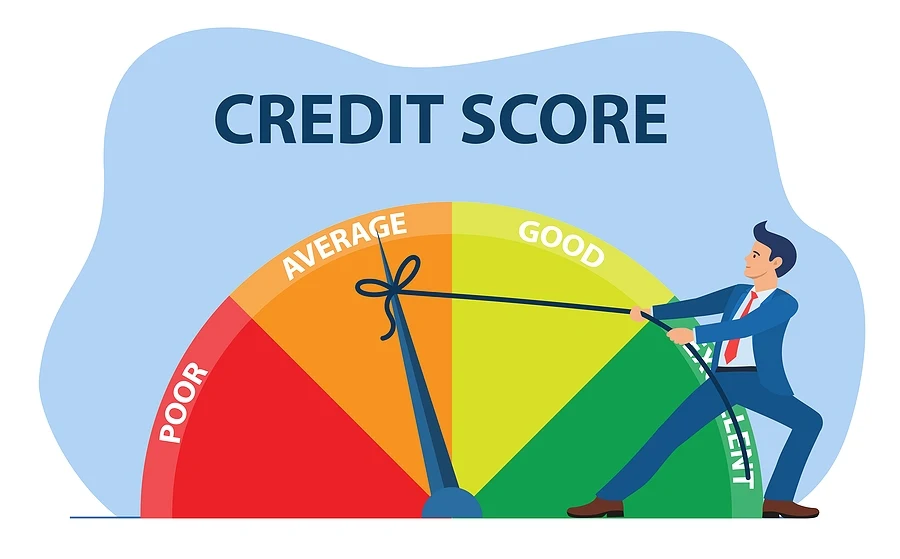
What is a credit score, and why does it matter so much?
In the U.S. you’ll hear about the credit score constantly. It’s a number between 300 and 850, and it touches more of your life than you’d expect:
- Renting: landlords check it; a low score can mean a bigger deposit or a rejection
- Car and home loans: your score sets your interest rate — a few dozen points can cost tens of thousands of dollars over a mortgage
- Utilities and phone plans: no credit history often means paying a deposit
- Credit cards: the good ones simply reject you without an established score
Here’s the part most people get wrong: the score has nothing to do with income or savings. It measures exactly one thing — whether you’ve borrowed money and paid it back on time. Earn $200k but never borrowed? You have no score. A student who paid a credit card on time for two years has better credit than you.
So building credit in America always starts the same way: borrow, and pay on time. And the simplest, safest, cheapest way to borrow is a credit card. That’s why everyone tells newcomers to get one.
Credit reports: the foundation
Two terms to keep separate: credit report and credit score.
Your credit report is the raw file. Three private companies — the credit bureaus Equifax, Experian and TransUnion — each keep one on you: which cards and loans you’ve had, the limits, whether you paid each month, and any late payments. Every credit application leaves a mark on it too.
Your credit score is just a number computed from that file by a formula.
Three things worth remembering:
- The report is the root; the score is the fruit. Keep the report clean and the score takes care of itself.
- The three files aren’t identical. Not every bank reports to all three bureaus, so your scores differ slightly across bureaus. Normal.
- Reading your own reports is free, forever. The one official source is AnnualCreditReport.com — now free weekly. If you spot an account you never opened or a payment wrongly marked late, you can dispute it and the bureau must investigate.
FICO vs VantageScore: why every app shows a different number
There are two main scoring formulas:
- FICO — the one banks actually use to approve you. When anyone says “credit score,” this is the default; the most common version is FICO 8.
- VantageScore — built by the bureaus, used mostly by free apps. The number Credit Karma shows you is VantageScore.
Both move in the same direction but can differ by 20–30 points. So Credit Karma says 720 and the bank pulls 695 — nobody’s wrong. Use any of them to watch trends; just know that for real decisions, banks look at FICO.
The score bands
| Score | Band | What it means |
|---|---|---|
| 800–850 | Exceptional | Everything approves; best rates on everything |
| 740–799 | Very Good | Nearly every card available; near-best loan rates |
| 670–739 | Good | Mainstream approvals; most premium cards in reach |
| 580–669 | Fair | Limited options, higher rates — build up with starter cards first |
| 300–579 | Poor | Rebuilding territory: secured cards plus time |
And one band people don’t know exists: no score at all. With a blank file, FICO won’t compute a number until your first account has reported for about 6 months. Until then, most banks can’t evaluate you and will decline everything — which is exactly why starter cards for zero-history applicants exist. We covered which ones to get in our first-card guide.
How the score is calculated: five factors
FICO publishes the approximate weights. Understand these five and you can derive 95% of every credit tip yourself.
1. Payment history (35%)
The biggest factor by far. Every account, every month: on time is a good mark, late is a stain.
Two details that matter:
- Under 30 days late doesn’t hit your report. Miss the due date by a few days and you’ll owe a late fee, but no mark appears on the report.
- 30+ days late is serious. It can knock 60–100 points off a good score and stays on the report for 7 years.
The fix is almost embarrassingly simple: set up autopay for the full statement balance on day one. Do that once and the 35% factor runs itself forever.
2. Utilization (30%)
Utilization = reported balance ÷ credit limit. Limit of $1,000 and a $600 balance on your statement date means 60% utilization. To a bank, high utilization looks like financial stress.
Key points:
- What’s reported is your balance on the statement closing date, not your total monthly spending. Want to spend a lot but report low? Pay some of it down before the statement closes.
- Under 30% is safe; under 10% is where scores look best.
- Utilization has no memory. High this month, low next month — the effect disappears immediately. Most short-term score swings are just this.
- Higher limits mean lower utilization for the same spending — so when your bank offers a credit limit increase, take it (usually no hard pull).
3. Age of accounts (15%)
How old your oldest account is, and the average age of all accounts. This factor only responds to time — no shortcuts.
Two takeaways:
- Open your first card as early as possible. It will be your “oldest account” for the rest of your life, even if it’s a basic student card.
- Don’t close old no-annual-fee cards. Closing eventually costs you the limit and the age. Put a small subscription on an unused card with autopay and let it live.
4. New applications (10%)
Every real application triggers a hard inquiry — a few points off, gone within a year. Banks fear patterns, not applications: five in a month reads as desperate; one every few months reads as normal. Checking your own score or using pre-approval tools are soft inquiries and cost nothing, ever.
5. Credit mix (10%)
Having both cards and loans (auto, student) helps slightly. But never borrow money you don’t need to optimize a 10% factor — cards alone can carry you past 780.
Why the credit card is the best credit-building tool
Look back at the five factors: on-time payments, low balances, old accounts. Now ask which product delivers all three for free:
- A no-annual-fee card is free to hold, and free to use if you pay in full — payment history without a cent of interest
- It reports to all three bureaus every month, automatically
- Spending and payments are entirely under your control
- Left alone, it just gets older — and that helps too
Compare the alternatives: an auto loan builds history but costs interest; being added as an authorized user on a family member’s old card inherits some history (a fine head start, though banks discount it). Nothing beats a lightly used card paid in full.
And once more, because it’s the myth that costs people real money: you do not need to carry a balance or pay interest to build credit. The bureaus record whether you paid on time — not whether the bank made money on you. “Keep a small balance to build faster” is folklore. Pay in full, always.
How to actually raise your score: the 8 moves that matter
The five factors are theory; this is practice, in order of importance:
- Set autopay to the full balance on day one. This single action covers the 35% factor, and it’s the only “set once, works for a decade” move in the game. People who pay manually eventually forget a month.
- Manage your statement-date balance. Learn the difference between two dates: the statement date is when your balance gets “photographed” and reported; the due date is the payment deadline. The bureaus see the statement-date number — so after a big purchase, pay part of it down before the statement closes and your reported utilization drops instantly. Fastest-acting move on this list.
- Push utilization under 10%. 30% is the passing grade; single digits is where scores look best. The multi-card version: let every card report $0 except one with a small balance — the standard play before an important application like a mortgage.
- Request a credit limit increase every 6–12 months. Discover, Capital One and Amex usually do these with a soft pull — free. Double the limit = half the utilization at the same spending.
- Never close old cards. Park a small subscription on an unused no-fee card with autopay and let it age. If a card’s annual fee isn’t worth it anymore, ask the bank for a product change to the no-fee version instead of canceling — you keep the age, drop the fee.
- Read your reports once or twice a year and dispute errors. Mistakes are more common than you’d think (someone else’s account, a payment wrongly marked late). Check free at AnnualCreditReport.com; disputes must be investigated within 30 days.
- If you’re ever late, act fast. Pay within 30 days and nothing hits the report. If a late mark already landed, pay it off and send the bank a goodwill letter asking for removal — for customers with years of clean history and one slip, banks genuinely do it.
- Thin-file boosters: get added as an authorized user on a family member’s old card; use Experian Boost or rent-reporting services to turn utilities and rent into history. Helpful at the margins — your own card is still the core engine.
Beginner traps (and a few tricks worth knowing)
The traps, ranked by how many people fall in:
- Paying only the minimum. The minimum keeps your “on time” record, but the rest of the balance rolls at ~25% APR — the only genuinely dangerous part of credit cards. Pay in full and interest is zero.
- Confusing the due date with the statement date. Paying by the due date avoids interest; paying before the statement date lowers reported utilization. Put both in your calendar.
- Applying for several cards in a burst. Each is a hard inquiry, and the thinner your file, the more it spooks banks. One or two cards is plenty for your first 12 months.
- Cosigning for a friend. Their missed payment lands on your report, identically. Just say no at this stage.
- Avoiding credit cards entirely and using debit. Debit doesn’t report — ten years of debit use leaves your file blank. And card fraud protection ($0 liability) actually beats debit: fraudsters spend the bank’s money, not yours.
The tricks:
- Turn on account alerts the day you’re approved — large-purchase and payment-due alerts take two minutes to set up.
- Freeze your credit when you’re not applying for anything. All three bureaus offer free security freezes online; while frozen, nobody can open an account in your name — the single most effective identity-theft defense. Unfreeze when you’re about to apply.
- Use issuer pre-approval tools first (soft pull) so you know your odds before a real application.
- Keep a simple card log: open date, statement date, due date, annual-fee date. Once you have several cards, this table becomes the most valuable document you own.
How to actually apply for a card
- Pick the right card. No credit history? Apply only where “no history” is accepted: student cards, starter cards, secured cards (which ones, exactly, is covered here). Once you’re at 670+ with a year of history, most mainstream cards are open. The most common beginner mistake is applying for a premium card on day one — instant denial.
- Use pre-approval when available. Capital One and others offer soft-pull pre-approval tools — check your odds with zero risk.
- Fill the form honestly. You’ll need your SSN (some issuers take an ITIN), address, and annual income. If you’re 21+, regular family support and stipends count as income — it’s not wages-only.
- Three possible outcomes: instant approval; instant denial; or “7–10 days” — that means human review, not rejection. Wait it out.
- If denied, don’t panic. The bank must mail you the reasons, and most have a reconsideration line — a polite, prepared phone call genuinely flips decisions.
- First thing after approval: set autopay to the full statement balance. Not the minimum. The full balance.
- Space out applications. Use a card for a few months before the next one. And remember Chase’s 5/24 rule: 5+ personal cards opened in 24 months means Chase auto-declines — so plan each application.
Where to check your score for free
- Bank apps: Chase Credit Journey, Discover Scorecard and most issuer apps show a free score — often even for non-customers
- Credit Karma: free and fine for trends — just remember it’s VantageScore, not the FICO banks use
- AnnualCreditReport.com: the actual reports, free weekly — read them once or twice a year and dispute errors
Your score wobbling a few points month to month is just utilization noise. Watch the quarterly trend instead.
Zero to 750: a realistic timeline
- Month 0: first card approved; autopay set to full balance
- Months 1–6: normal light spending, low balances, quiet accumulation
- Month ~6: your first score appears — usually 600s to low 700s
- Months 6–12: request a credit limit increase; add card #2 if there’s a reason
- Months 12–24: no late payments + low utilization = ~750 is the normal outcome. At that point, good cards, apartments and car loans stop being a problem
- After that: age compounds on its own. Keep old cards open, keep balances low, apply with a plan. There’s no trick to 800+ — it’s the same habits with more years on the clock.
Our take
The U.S. credit system looks complicated, but what it rewards is almost boring: paying on time, consistently, for a long time. You can’t buy it and you can’t cram for it — but you can automate the whole thing: one no-fee card, autopay in full, low balances, old cards left alone, applications made with a plan. Do that, and the score grows by itself while you get on with your life.
This is general information, not financial advice. Scoring details are published by FICO and the bureaus and may change.
Frequently Asked Questions
What credit score do I start with?
None. If you're new to the U.S. credit system, you don't have a low score — you have no score at all. Your first score appears about 6 months after your first account starts reporting, usually somewhere in the 600s to low 700s.
Does checking my own credit score lower it?
No. Checking your own score or report is a soft inquiry and never affects anything. Only a hard inquiry — when a bank pulls your file for a real application — costs a few points.
Do I need to carry a balance and pay interest to build credit?
No — this is the most common and most expensive myth. The bureaus only record whether you paid on time, not whether the bank earned interest. Pay in full every month; your credit builds exactly the same.
Why did my score drop after I paid off and closed a card?
Closing a card removes its limit from your utilization math, and eventually its age from your file. Old no-annual-fee cards are usually worth keeping open.
How long from zero to 750?
With one or two cards, on-time payments and low balances, 12–24 months to around 750 is a normal, realistic outcome. The only thing you can't speed up is account age — which is why starting early beats starting perfectly.