Credit Card Trip Delay Insurance: The Complete 2026 Comparison (25+ Cards, Every Rule That Matters)
Which credit cards actually pay when your flight is delayed — 6-hour vs 12-hour triggers, $300 vs $500 caps, per-ticket vs per-trip math, the four-reason fine print, award-ticket rules, and exactly how to file a claim with Chase, Amex, Citi and Capital One.

Why this benefit is worth understanding properly
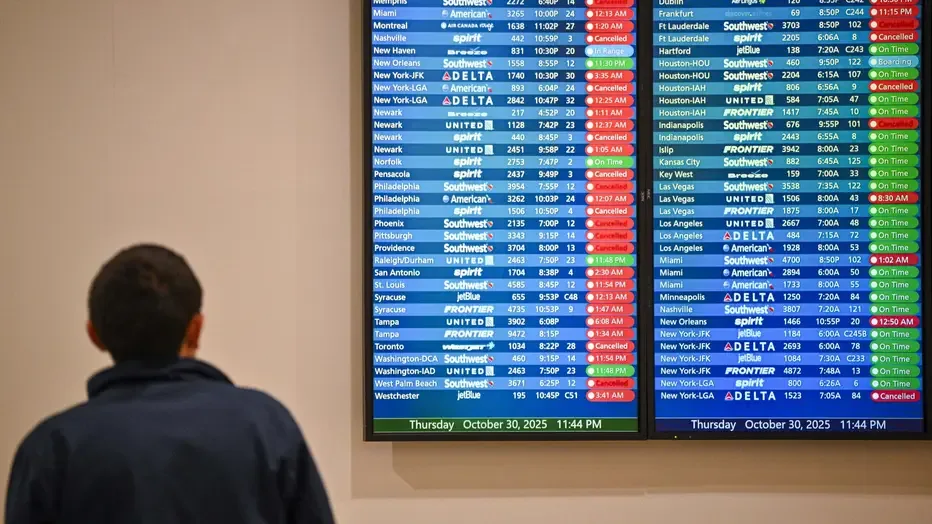
Trip delay insurance is the most-used, least-understood travel protection on a credit card. Flight delays are not rare events — several percent of US flights misconnect badly enough to strand someone overnight every single day — and unlike lounge access or elite status, this benefit pays out in cash. A single claimed hotel-plus-dinner night is worth $200–400, which is more than most annual fees.
It’s also the benefit where the fine print does the most work. Two cards that both advertise “trip delay reimbursement up to $500” can behave completely differently when you’re actually standing in a terminal at midnight: one pays per person and accepts an award ticket where you only charged $11.20 in taxes; the other pays per trip, requires the full round-trip fare on the card, and has already used up its two annual claims.
This guide compares every major US card that carries the benefit — and flags the ones that surprisingly don’t — with the trigger hours, caps, payment rules, covered-reason lists and claim mechanics laid out side by side.
Verified August 2026 against issuer Guides to Benefits and cross-checked across multiple independent sources. Issuers revise benefit guides quietly; before relying on a specific number for an expensive trip, confirm against the current guide for your card.
How trip delay coverage actually works
Every card version of this benefit shares the same skeleton. Five variables decide everything:
- The trigger — how long the delay must be, measured against your scheduled departure. The premium tier triggers at 6 hours or any overnight stay; the mid tier at 12 hours (usually also “or overnight”). A rolling series of 90-minute delays that adds up counts; check the final actual-vs-scheduled gap.
- The cap and its unit — $500 or $300, and critically, per person or per trip. Chase and Capital One pay up to $500 per covered traveler — a family of four can claim up to $2,000 for one ugly night. Amex and Citi cap at $500 per trip total, no matter how many of you are stranded.
- The payment rule — what had to be charged to the card. Chase, Capital One and Bank of America accept partial payment: award-ticket taxes and fees qualify, as do bookings made with the issuer’s points. Citi requires the entire fare on the card or ThankYou points. Amex requires the full round-trip fare on the card — Membership Rewards Pay with Points through Amex Travel counts (it’s charged then credited), but an airline-miles award where you only paid taxes does not.
- The covered-reason list — the sleeper variable that decides real-world claims. Chase’s guides enumerate exactly four covered reasons: equipment failure, inclement weather, strike, and hijacking/skyjacking. A crew-scheduling meltdown, a staffing shortage, or an FAA ground stop is not on the list — this is the most common source of denied Chase claims. Amex’s list runs weather, equipment failure, terrorist action/hijacking, and lost or stolen passports/travel documents. Citi’s Strata Elite enumerates weather, equipment failure and lost passport. In practice, airlines code most operational delays as “equipment” or “weather,” and what the airline writes in its delay-confirmation letter is what the claim administrator goes by.
- Claim frequency limits — Amex, Capital One and Citi allow 2 claims per card per 12 months. Chase publishes no per-year cap.
Two more universal rules: coverage is secondary (it pays in excess of what the airline or any other insurance reimburses — though for delay expenses, airlines rarely pay anything, so in practice it behaves like primary), and the delay must not have been announced before the day of departure. You also generally must be away from your home city.
The master table
Premium tier — 6 hours (or overnight), $500:
| Card | Annual fee | Cap unit | Payment rule | Claims/12 mo | Notes |
|---|---|---|---|---|---|
| Chase Sapphire Reserve (+ Business) | $795 | $500/person | Partial OK; UR bookings OK | No stated cap | The benchmark. Family = cardholder, spouse/DP, dependent children ≤26 |
| Ritz-Carlton Card | $450 | $500/ticket | Partial OK | No stated cap | Legacy card (no new applications); same Chase engine |
| Capital One Venture X (+ Business) | $395 | $500/person | Partial OK; award taxes qualify | 2 | File within 30 days; must be away from home city |
| Amex Platinum (+ Business Platinum) | $895 | $500/trip | Full round-trip fare on card | 2 | MR Pay with Points via Amex Travel qualifies |
| Delta SkyMiles Reserve (+ Business) | $650 | $500/trip | Full round-trip fare | 2 | Same Amex engine |
| Marriott Bonvoy Brilliant | $650 | $500/trip | Full round-trip fare | 2 | Same Amex engine |
| Hilton Honors Aspire | $550 | $500/trip | Full round-trip fare | 2 | Same Amex engine |
| Citi Strata Elite | $595 | $500/trip | Full fare on card/TY points | 2 | Covered reasons enumerated: weather, equipment failure, lost passport |
| Citi Strata Premier | $95 | $500/trip | Full fare on card/TY points | 2 | Cheapest 6-hour trigger on the market |
| Citi / AAdvantage Executive | $595 | $500/traveler | Full fare | — | Ground transport covered; rental cars excluded |
| Citi / AAdvantage Globe | $350 | $500 | Full fare | — | New 2025 card; confirm details in its benefit guide |
| BoA Premium Rewards Elite | $550 | $500/ticket | Charge ticket to card | — | 6 hr or overnight |
Mid tier — 12 hours (or overnight), $500:
| Card | Annual fee | Cap unit | Notes |
|---|---|---|---|
| Chase Sapphire Preferred | $95 | $500/ticket | Same Chase engine as the Reserve, slower trigger |
| Ink Business Preferred | $95 | $500/trip | The business workhorse |
| United Explorer / Quest / Club (+ Business) | $150–695 | $500/traveler | Gateway ($0) does not carry the benefit |
| World of Hyatt Card | $95 | $500/ticket | |
| Aeroplan Card | $95 | $500/traveler | |
| Marriott Bonvoy Boundless | $95 | $500/person | |
| BoA Premium Rewards | $95 | $500/ticket | 12 hr tier at BoA’s entry premium card |
Amex mid tier — 12 hours, $300 per trip, 2 claims/12 mo:
Amex Gold, Amex Green, Delta SkyMiles Platinum, Marriott Bonvoy Bevy, Amex Business Gold. Same full-round-trip-fare rule as the premium Amex cards, smaller cap.
Popular travel cards with NO trip delay coverage (the common surprises): Capital One Venture and VentureOne, Wells Fargo Autograph and Autograph Journey, United Gateway, the Southwest cards, IHG One Rewards cards, Delta Gold, Hilton Surpass, and the Chase Freedom family. US Bank’s Altitude Reserve (closed to new applicants) is a special case — reports indicate its delay coverage reimburses transportation-type expenses only, not hotels or meals.
The five cards that matter most, in depth
Chase Sapphire Reserve — the benchmark. Six-hour or overnight trigger, $500 per covered person, and the most generous payment rule in the business: charge any portion of the fare — the $5.60 in taxes on a mileage award counts — or book with Ultimate Rewards points outright. Covered travelers are the cardholder, spouse or domestic partner, and dependent children under 26, whether or not they’re traveling with you. No published limit on claims per year. The two things that trip people up: the four-reason list (get the airline to put “weather” or “mechanical” in writing, not “crew availability”), and the 60-day window to start a claim with the Benefit Administrator.
Chase Sapphire Preferred — the same engine at $95. Identical mechanics to the Reserve including per-person caps and partial payment; the only difference is the 12-hour/overnight trigger. For anyone unwilling to pay a premium fee, this plus the identical Ink Business Preferred is the value play in the Chase house.
Capital One Venture X — the Reserve’s terms at half the fee. Six hours or overnight, $500 per passenger, award-ticket taxes qualify, and claims in community reports pay out reliably. Two constraints the Reserve doesn’t have: two covered trips per 12 months, and a 30-day deadline to file with itemized documentation.
Amex Platinum — strong cap, strict rules. $500 per trip at six hours sounds like the Reserve, but three Amex-specific rules change the math: the entire round-trip fare must hit the card (two one-ways qualify only if they form a provable round trip returning to the origin); per-trip means one $500 pool regardless of family size; and two claims per 12 months across the card. The flip side: every $300–650-fee Amex from the Delta Reserve to the Hilton Aspire carries the identical benefit, so if you already hold one for other reasons, the coverage rides along free.
Citi Strata Premier — the budget champion. $95 for a six-hour trigger is unmatched; Citi rebuilt its travel insurance stack here in 2024 after famously gutting it in 2019. The catches: $500 per trip (not per person), the whole fare must be on the card or paid with ThankYou points, coverage is explicitly excess of airline compensation, and two claims per 12 months. Pair it with the fact that Citi’s AAdvantage Executive carries a similar six-hour benefit and AA flyers have a real alternative to Chase.
Fine print that decides real claims
- Covered reasons beat everything else. Ask the airline’s customer service desk for a written delay confirmation before you leave the airport, and if the honest cause is ambiguous, ask them to describe it as the mechanical or weather event it usually partly is. “Awaiting inbound crew” on the letter is how Chase claims die.
- Announced-in-advance delays don’t count. If the airline notified you of the delay the day before departure, the benefit doesn’t apply — book alternatives instead.
- Per-person vs per-trip changes family math by 4x. A family of four stranded overnight: Sapphire Reserve/Preferred or Venture X can cover up to $2,000 of expenses; an Amex or Citi card caps the whole party at $500.
- The Amex round-trip rule is survivable but real. Two separate one-way bookings qualify if they form a round trip back to your starting city and you can document both; a genuine one-way (repositioning, open jaw ending elsewhere) does not.
- Receipts must be itemized. The administrator wants line items, not a credit-card total. No alcohol on some cards’ reimbursable lists; tips commonly excluded. Keep it to “reasonable” — a $400 airport Marriott is fine, a suite upgrade is not.
- Two-claim caps are per card, per rolling 12 months (Amex, Citi, Capital One). Heavy flyers who hit multiple delays a year: this is a genuine argument for the Chase engine, which publishes no such cap.
Which card should buy the ticket?
The entire benefit follows the card that paid, so this is really a “which card do I put flights on” decision:
- Family travelers → a per-person Chase card or Venture X, always. The 4x cap difference dwarfs everything else.
- Frequent flyers with many segments → Chase (no claim cap) over the two-claims-a-year issuers.
- Award-ticket bookers → Chase, Capital One or BoA; put the taxes on the card. On Amex, only Pay-with-Points bookings through Amex Travel carry the coverage.
- Budget optimizers → Citi Strata Premier at $95 buys the 6-hour trigger; Sapphire Preferred/Hyatt/Aeroplan/Boundless at $95 buy the 12-hour Chase engine with per-person caps. Both beat any no-fee card, none of which carry the benefit.
- Already holding a premium Amex → the coverage is already on every flight where the full fare hits the card; just respect the round-trip and two-claim rules.
Filing a claim, step by step
- At the airport: get the delay confirmation letter from the airline (with the cause in writing), keep boarding passes, and start collecting itemized receipts for everything — hotel, meals, transport, toiletries.
- Start the claim: Chase — Benefit Administrator at (800) 350-1697 or eclaimsline.com, within 60 days of the delay. Amex — americanexpress.com/onlineclaim. Capital One — through the benefits administrator, filing within 30 days. Citi — through the Mastercard benefits portal for your card.
- Submit: claim form, itinerary, the card statement showing the fare purchase, the airline’s delay statement, boarding passes, itemized receipts.
- Expect several weeks of processing and possible requests for more documents. Reimbursement arrives as statement credit or check.
Practical habit: photograph every receipt the moment you get it, and forward the airline’s delay email to yourself with a note of the announced cause.
Our take
Trip delay coverage is the rare card benefit that behaves like actual insurance — high-frequency, medium-severity, and paid in cash. The market has quietly split into two philosophies: Chase and Capital One sell forgiving terms (partial payment, per-person caps, awards-friendly), Amex and Citi sell reach (the same 6-hour/$500 headline across a dozen cards, but per-trip caps, full-fare rules and claim limits). If delays genuinely cost you money — families, connection-heavy itineraries, winter routes — put the airfare on the forgiving engine, and let the strict one handle the perks it’s better at.
Coverage details verified August 2026 against issuer benefit guides and multiple independent sources; issuers amend these documents without announcements — confirm your card’s current Guide to Benefits before relying on a specific figure.
FAQ
What does credit card trip delay insurance cover? Reasonable expenses you wouldn’t have had if the flight ran on time: meals, a hotel night, ground transportation, toiletries and medication. It pays after (in excess of) anything the airline or another policy reimburses, up to the card’s cap — typically $300 or $500. Tips and alcohol are commonly excluded.
Which credit card has the best trip delay insurance? For pure terms, the Chase Sapphire Reserve is the benchmark: a 6-hour (or overnight) trigger, $500 per covered person rather than per trip, partial payment counts (award-ticket taxes qualify), and no published claims-per-year cap. The Capital One Venture X matches most of that at a $395 fee, and the $95 Citi Strata Premier is the cheapest way to a 6-hour trigger.
Does trip delay insurance work on award tickets? It depends on the issuer. Chase, Capital One and Bank of America accept partial payment — putting an award ticket’s taxes and fees on the card qualifies. Citi requires the entire fare on the card or ThankYou points. Amex requires the full round-trip fare charged to the card, so a mileage award where you only paid taxes generally does not qualify (Membership Rewards Pay with Points through Amex Travel does).
How long does my flight have to be delayed? Six hours (or an overnight stay) on the premium tier — Sapphire Reserve, Ritz-Carlton, Amex Platinum, Delta Reserve, Hilton Aspire, Marriott Brilliant, Venture X, the current Citi lineup and BoA Premium Rewards Elite. Twelve hours on the mid tier — Sapphire Preferred, Ink Preferred, United Explorer/Quest/Club, Hyatt, Aeroplan, Marriott Boundless and BoA Premium Rewards. Amex’s mid-tier cards (Gold, Green, Delta Platinum, Bonvoy Bevy, Business Gold) pay at 12 hours but cap at $300.
Why was my trip delay claim denied? The most common reasons: the delay cause wasn’t on the covered list (Chase and Citi enumerate specific reasons — crew scheduling and ATC ground stops usually don’t qualify), the fare wasn’t paid with the right card under that issuer’s payment rule, the itinerary was a one-way on an Amex card, you’d already used the card’s two claims in 12 months, or receipts weren’t itemized. The delay also generally must not have been announced before the day of departure.
Do I need to buy separate travel insurance if my card has trip delay coverage? For delay expenses on shorter trips, the card is usually enough. Card coverage doesn’t replace travel medical, evacuation or high-value cancellation coverage — for expensive international trips, standalone insurance still earns its keep. Think of card trip delay coverage as the layer that turns an ugly overnight delay into a paid hotel and dinner.
Frequently Asked Questions
What does credit card trip delay insurance cover?
Reasonable expenses you wouldn't have had if the flight ran on time: meals, a hotel night, ground transportation, toiletries and medication. It pays after (in excess of) anything the airline or another policy reimburses, up to the card's cap — typically $300 or $500. Tips and alcohol are commonly excluded.
Which credit card has the best trip delay insurance?
For pure terms, the Chase Sapphire Reserve is the benchmark: a 6-hour (or overnight) trigger, $500 per covered person rather than per trip, partial payment counts (award-ticket taxes qualify), and no published claims-per-year cap. The Capital One Venture X matches most of that at a $395 fee, and the $95 Citi Strata Premier is the cheapest way to a 6-hour trigger.
Does trip delay insurance work on award tickets?
It depends on the issuer. Chase, Capital One and Bank of America accept partial payment — putting an award ticket's taxes and fees on the card qualifies. Citi requires the entire fare on the card or ThankYou points. Amex requires the full round-trip fare charged to the card, so a mileage award where you only paid taxes generally does not qualify (Membership Rewards Pay with Points through Amex Travel does).
How long does my flight have to be delayed?
Six hours (or an overnight stay) on the premium tier — Sapphire Reserve, Ritz-Carlton, Amex Platinum, Delta Reserve, Hilton Aspire, Marriott Brilliant, Venture X, the current Citi lineup and BoA Premium Rewards Elite. Twelve hours on the mid tier — Sapphire Preferred, Ink Preferred, United Explorer/Quest/Club, Hyatt, Aeroplan, Marriott Boundless and BoA Premium Rewards. Amex's mid-tier cards (Gold, Green, Delta Platinum, Bonvoy Bevy, Business Gold) pay at 12 hours but cap at $300.
Why was my trip delay claim denied?
The most common reasons: the delay cause wasn't on the covered list (Chase and Citi enumerate specific reasons — crew scheduling and ATC ground stops usually don't qualify), the fare wasn't paid with the right card under that issuer's payment rule, the itinerary was a one-way on an Amex card, you'd already used the card's two claims in 12 months, or receipts weren't itemized. The delay also generally must not have been announced before the day of departure.
Do I need to buy separate travel insurance if my card has trip delay coverage?
For delay expenses on shorter trips, the card is usually enough. Card coverage doesn't replace travel medical, evacuation or high-value cancellation coverage — for expensive international trips, standalone insurance still earns its keep. Think of card trip delay coverage as the layer that turns an ugly overnight delay into a paid hotel and dinner.