MaxRewards vs MaxWorth: Credit Card App Comparison (2026)
These two apps do most of the same things. The one real difference is that MaxRewards links to your bank accounts to track credits automatically, and MaxWorth never asks for a login. A feature-by-feature comparison, and an honest look at what that trade-off actually buys you.

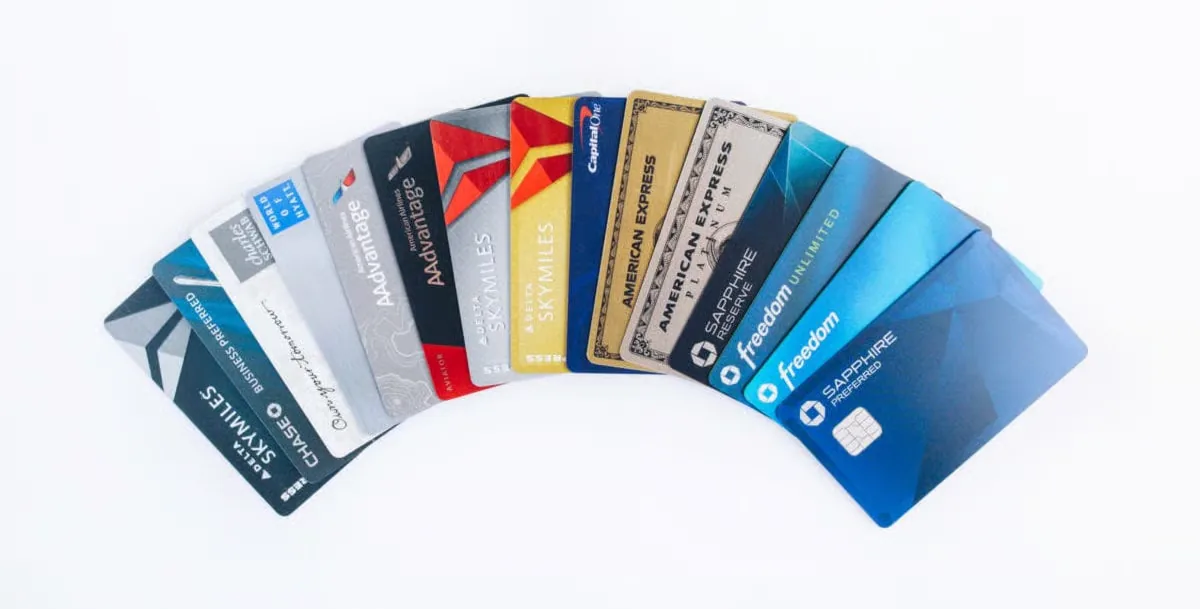
These apps are more alike than different
If you’re comparing MaxRewards and MaxWorth expecting two very different products, the honest answer is that they aren’t. Best card by category, card-linked offer activation, nearby merchant maps, benefit and credit tracking, points valuation — both do all of it.
There’s exactly one structural difference, and everything worth deciding comes down to it:
MaxRewards requires your username and password to connect to your bank accounts and track your transaction data. MaxWorth is designed not to connect to any bank account at all.
That single choice is what makes MaxRewards’ credit tracking automatic and ours manual. It’s a real trade, with a real benefit on one side and a real cost on the other. Let’s go through the features first, then look at that trade honestly.
Feature comparison
| MaxRewards | MaxWorth | |
|---|---|---|
| Requires your bank username & password | Yes — stored, no opt-out | No — never requested |
| AI assistant | ❌ | ✅ |
| Best card by spending category | ✅ | ✅ |
| Card-linked offer activation (browser extension) | ✅ | ✅ |
| Benefit & annual credit tracking | ✅ Automatic, from transactions | ✅ Manual — you mark credits as used |
| Nearby merchant map with earn rates | ✅ | ✅ |
| Points & rewards balance tracking | ✅ | ✅ |
| Card database & value calculator | ✅ | ✅ |
| Welcome bonus progress | ✅ | ✅ |
| Annual fee & expiry reminders | ✅ | ✅ |
| Subscription tracking | ❌ | ✅ |
| Credit score monitoring | ✅ | ❌ |
| Transaction categorization & spend analysis | ✅ | ❌ |
| Business tools (receipts, CSV export) | ✅ Platinum tier | ❌ |
| Countries covered | 🇺🇸 US | 🇺🇸 US 🇨🇦 Canada 🇦🇺 Australia |
| Languages | English | English Chinese |
The features MaxRewards has that we don’t — credit score monitoring, transaction categorization, spend analysis, receipt matching — all share one property: they’re only possible because it reads your accounts. That’s not a coincidence, it’s the same trade showing up in different places.
What the bank login actually buys you
This is the part most comparisons get wrong, including an earlier version of this article.
Linking accounts is not what makes Chase and Amex offer activation work. Both apps activate Amex and Chase offers through a browser extension, working inside the session you’re already signed into. That part is equivalent, and it isn’t a differentiator.
What the login actually buys is transaction data — and that’s genuinely valuable:
When your $300 dining credit posts to your statement, MaxRewards sees the transaction and marks the credit as used. You don’t have to remember, you don’t have to open the app, you don’t have to tell it anything. Across a wallet of premium cards with a dozen recurring credits, that’s real convenience, and it’s the honest reason to consider paying for it.
MaxWorth can’t do that, because we don’t see your transactions. You mark a credit as used when you use it. If hands-off tracking is what you’re after, MaxRewards does something we don’t.
The part worth thinking about carefully
There’s no public record of a MaxRewards breach. They’re an established company with hundreds of thousands of members, they’ve been at this for years, and nothing here suggests they’re careless with what they hold.
So this isn’t a question about them specifically. It’s a simpler structural point:
A stored credential is a credential that can be exposed.
Not through negligence, necessarily — through a compromised laptop, a third-party vendor, a misconfigured backup, or an acquisition that changes who controls the data. None of those require anyone to have done anything wrong. They’re just the ordinary ways data moves in a direction nobody planned.
Which leads to the only claim we’d actually make: the safest credential is the one nobody is holding.
That’s why MaxWorth is built without an account connection. Not because we think we’d protect your bank password better than anyone else would — we’d rather not be in a position where that question matters at all. You don’t have to trust us on it, because there’s nothing of yours for us to be trusted with.
It’s a narrower promise than “we take security seriously.” It’s also one that doesn’t depend on us being good at anything.
So the trade is
Automatic credit tracking, in exchange for a working copy of your bank logins stored by a third party.
Some people will take that deal, and it’s a defensible choice — the convenience is real. Others will decide that marking a credit as used once a month is a small price for having no credentials anywhere. Both are reasonable. What isn’t reasonable is making that decision without knowing you’re making it.
Two documented side effects worth weighing if you do link:
- Sessions break often. Issuers actively fight automated logins. Reviewers testing the app report re-authenticating with 2FA two to four times a month, Chase and Amex worst.
- Some Chase customers report syncs triggering a fraud lock, leaving them locked out of their own account for days pending review. Uncommon — but what’s affected is your bank account, not the app.
Price
| MaxRewards | MaxWorth | |
|---|---|---|
| Free tier | ✅ | ✅ |
| Monthly | ❌ Annual billing only | $7.99/mo |
| Annual | From $108/yr (Gold) · $240/yr (Platinum) | $49.99/yr |
| Lifetime | ❌ Not offered | $159 once |
Two things stand out. MaxRewards bills annually only, so trying it means committing to a year up front. And there’s no lifetime option: $159 once against $108 every year. If you plan to keep optimizing your cards for more than about eighteen months, that changes the arithmetic entirely — though whether it matters depends on how much you value automatic tracking.
How to decide
Choose MaxRewards if hands-off credit tracking is worth more to you than keeping your credentials out of third-party hands, you also want credit score monitoring and spend analysis, and your cards are US-only.
Choose MaxWorth if you’d rather not have your bank logins stored anywhere, you hold Canadian or Australian cards, you want an AI assistant and subscription tracking, or you’d rather pay once than every year.
One check before you subscribe to anything
Open your premium card’s benefits page and count the credits you haven’t touched this cycle. Multiply out what they’re worth.
If that number is large, you need one of these apps — which one depends on the trade above. If it’s small, you may not need either, and the honest answer is to keep your money.
MaxWorth tracks credit card benefits, credits and offers across the US, Canada and Australia, in English and Chinese. We never ask for your bank login — there’s no account connection in the product at all.
Frequently Asked Questions
What does MaxRewards actually use my bank login for?
Transaction data. Once it can read your statements, it can tell whether the $300 dining credit has been used this cycle without you marking anything — the credit posts as a transaction and the app sees it. That's the real benefit of linking, and it's a genuine convenience.
Does MaxWorth need my bank login?
No. MaxWorth never connects to a bank account. You add the cards you hold, and the app tracks each benefit's cycle, cap and expiry date. You mark a credit as used when you use it. More manual — but there are no banking credentials anywhere in the product.
If MaxWorth can't see my transactions, how accurate is the tracking?
The benefit terms are exact — every cycle length, cap, reset date and expiry is maintained per card. What the app can't know on its own is whether you've spent a given credit, so you confirm that when you use it. Precise on the rules, dependent on you for the usage.
Is MaxRewards unsafe?
There's no public record of a MaxRewards breach, and it's an established company with hundreds of thousands of members. The question isn't whether a particular company is careful — it's that any stored credential is a credential that can be exposed, and you're deciding whether automatic tracking is worth that.
Do both apps recommend the best card to use?
Yes. Best-card-by-category recommendations, card-linked offer activation through a browser extension, nearby merchant maps and benefit tracking all exist on both sides. The feature lists overlap far more than they differ.