U.S. Bank Altitude Reserve Transfer Partners Are Finally Live — And Two of Them Lasted a Day
After eight months of waiting, U.S. Bank shipped transfer partners for the Altitude Reserve on August 12 — then pulled two of the four within 24 hours. What Accor and Ethiopian transfers are actually worth per point, how the December 2025 devaluation reshaped the math, and whether the $400 fee still clears for a card you can never re-apply for.

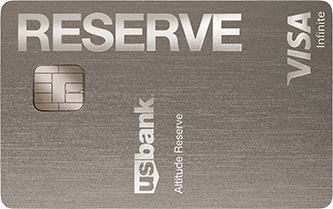
For eight months the U.S. Bank Altitude Reserve has been carrying an IOU. When U.S. Bank gutted the card in December 2025, the softener was a banner in the rewards center promising that points transfers to airline and hotel programs were “coming soon.” In May 2026 that banner quietly disappeared, and most of us wrote it off.
On August 12, 2026, it shipped. Four partners, live in the rewards center. Within roughly a day, two of them were gone again.
This is where the Altitude Reserve stands now — a card nobody can apply for, that just got the feature it was promised, in a form that doesn’t undo the damage. Here’s what the transfers are worth, what the December changes actually did to the math, and how to decide on a $400 fee for a card you can never get back.
What launched, and what survived
Four partners went live on August 12:
| Partner | Ratio | Status |
|---|---|---|
| ALL Accor | 2:1 | Live |
| Ethiopian ShebaMiles | 1:1 | Live |
| Air France-KLM Flying Blue | 1:1 | Pulled within ~24 hours |
| Qantas Frequent Flyer | 1:1 | Pulled within ~24 hours |
U.S. Bank removed Flying Blue and Qantas from the list almost immediately, reportedly over IT problems, and says both are coming back. The two that stuck are, unfortunately, the two least useful to most U.S.-based cardholders.
One absence is louder than it looks: Korean Air SkyPass isn’t on the list, despite U.S. Bank issuing Korean Air’s co-branded cards in the U.S. If any partner should have been the layup, it was that one.
What the transfers are actually worth
The number that matters is cents per Altitude point, and it has to beat 1.0 — the flat rate you get redeeming toward travel or a U.S. Bank checking deposit.
ALL Accor at 2:1. Accor’s Reward points carry a fixed value — 2,000 points redeem for €40, so one point is €0.02, or roughly 2.3 cents at recent exchange rates. Two Altitude points buy one Accor point, so you’re getting about 1.15 cents per Altitude point. That’s real, it’s a floor rather than a gamble, and it’s about 15% better than cashing out at 1 cent.
Run it through the earning rate and mobile wallet spend returns about 3.45% toward Accor stays. For comparison, that same spend was worth 4.5% before December 15 and is worth 3% today at the 1-cent baseline.
The catch is that Accor’s footprint is European-weighted — Sofitel, Novotel, Mercure, Ibis, Fairmont, Raffles. If you don’t stay at those properties, the 1.15 cents is theoretical.
Ethiopian ShebaMiles at 1:1. Harder to value, higher ceiling. ShebaMiles is a Star Alliance program with a published award chart and some genuinely cheap partner redemptions, which means a 1:1 transfer can clear 2 cents per point on the right award. It can also strand you: ShebaMiles has a reputation for hard-to-reach service and clunky booking, and award space has to actually exist on the route you want.
Treat Accor as the reliable floor and Ethiopian as the occasional outsized win. Neither restores the card to what it was.
The December 2025 devaluation, precisely
If you’ve been coasting on autopilot, this is the section to read. Four changes took effect December 15, 2025.
Redemption value: 1.5¢ → 1¢. The single biggest hit. The Altitude Reserve’s whole identity was 3x on mobile wallet redeemed at 1.5 cents — an effective 4.5% on nearly everything you could tap to pay for. That became 3%. Real-Time Mobile Rewards still exists as a feature; it just pays 1 cent now, which strips out most of the reason to use it.
Mobile wallet 3x capped at $5,000 per billing cycle. Past that, 1x. So the 3x bucket tops out around $60,000 of tap-to-pay spend a year. Heavy spenders lost the most here — the card used to be uncapped.
The $325 credit is Travel Center-only. It used to apply automatically against direct travel and dining purchases, which made it close to a $325 rebate on spending you’d do anyway. Now it only triggers on bookings made through the U.S. Bank Travel Center.
New Travel Center bonuses: 10x hotels and car rentals, 5x flights. The one genuinely positive change, and it’s the counterweight to the credit restriction — see below.
Does the Travel Center actually work out?
This is the question the fee decision turns on, and the honest answer is “closer than you’d expect, but not free.”
At 1 cent per point, 10x on hotels and car rentals is a 10% return on the booking. That’s a big number. The question is whether the Travel Center’s prices are more than 10% above what you’d pay booking direct, and whether you care about what you give up.
What you give up booking a hotel through an OTA is usually elite night credit, loyalty points, and sometimes elite benefits on the stay — call it 10–15% of the rate’s value for someone with status, and near zero for someone without. So:
- No hotel status: 10x roughly compensates for OTA pricing. The $325 credit is close to face value for you.
- Meaningful hotel status: you’re trading away nights, points, and upgrades. The 10x doesn’t cover it. The $325 credit is worth noticeably less than $325.
Flights are cleaner. 5x on airfare is a 5% return, and airline tickets booked through an OTA generally still earn miles and elite credit based on fare class. If you’re going to use the credit, flights are usually the least lossy way to burn it.
Is the $400 still worth it?
Lay out the whole card as it exists today:
| Item | Value |
|---|---|
| Annual fee | −$400 |
| $325 travel credit (Travel Center only) | +$325 at best, less if you have hotel status |
| Priority Pass, 8 visits/year (no restaurants) | +$100–200 if you fly a few times |
| Global Entry / TSA PreCheck credit, up to $100 | ~+$20–25/year amortized |
| 12 Gogo inflight Wi-Fi sessions | +$0–100, entirely usage-dependent |
| No foreign transaction fees | Situational |
| Authorized user | −$75 each |
The decision collapses to one question: will you actually spend $325 through the U.S. Bank Travel Center this year?
If yes — your real cost is $75. For 8 lounge visits, Gogo sessions, and a 3–3.45% everyday return on tap-to-pay, that’s an easy keep. Nothing else in your wallet needs to change.
If no — you’re paying $400 for benefits worth maybe $150 to a frequent flyer and less to everyone else, on a card whose headline earning rate is now beaten by several no-annual-fee cards. That doesn’t clear.
This is the same test every premium card now has to pass, and the Altitude Reserve fails it in a specific way: its credit is narrow and its earning rate is ordinary. A Chase Sapphire Reserve charges twice the fee but hands back credits across more of a normal travel year. Judge the Reserve on whether you’ll spend the $325, not on what the card used to be.
Note the Priority Pass restriction while you’re here: the Altitude Reserve’s 8 visits cannot be used at Priority Pass restaurants, per U.S. Bank. If you were counting on the airport-restaurant credit that makes other Priority Pass memberships worthwhile, it isn’t part of this one.
The one-way door
Here’s the part that deserves more weight than a single year’s fee.
The Altitude Reserve has been closed to new applications since November 11, 2024. If you close it, or product-change it into an Altitude Connect or Altitude Go to dodge the fee, you cannot get it back. There’s no reapplying in two years if U.S. Bank restores 1.5 cents or lands the Flying Blue and Qantas transfers properly.
So the calculus isn’t just “is this worth $400 this year.” It’s “is this worth $400 to keep the option open.” A product change to an Altitude Connect ($95, and it carries 4 Priority Pass restaurant visits) or an Altitude Go ($0) is a reasonable way to keep the account history and stop the bleeding — but it’s permanent, and it hands back a card that U.S. Bank has already shown it’s willing to improve.
If you’re genuinely on the fence and can absorb $75 net, keeping it one more cycle to see whether Flying Blue and Qantas come back is a defensible bet. Flying Blue in particular — with its monthly Promo Rewards and reasonable transatlantic pricing — would be a materially better partner than either of the two that are live today.
What to do this month
- Check whether you’ve used the $325. It’s a cardmember-year credit, not a calendar-year one, and it’s the whole fee argument. If you haven’t touched it and your anniversary is coming, book something through the Travel Center — flights first. If you’re not tracking credits like this anywhere, that’s exactly the gap benefit trackers exist to close — an unused $325 is the difference between a $75 card and a $400 one.
- Watch the $5,000 monthly mobile wallet cap. Anything past it earns 1x. If you were running a big recurring charge through tap-to-pay, it’s now worth 1% and belongs on a different card.
- Don’t transfer points speculatively. Transfers are one-way. Accor at 1.15 cents is only worth taking when you have a specific stay in mind; otherwise your points are fine sitting at the 1-cent floor.
- Decide the fee question on the credit, not on nostalgia. This card was special because of 4.5% on everything. That version is gone and isn’t coming back. Evaluate what it is now.
Frequently asked questions
Can I still apply for the U.S. Bank Altitude Reserve in 2026? No. U.S. Bank stopped accepting new applications on November 11, 2024, and has never reopened them. Existing cardholders keep the card and can renew it indefinitely, but if you close it or product-change out of it, there is currently no way back.
Which Altitude Reserve transfer partners actually work right now? Two: ALL Accor at 2:1 and Ethiopian ShebaMiles at 1:1. Air France-KLM Flying Blue and Qantas Frequent Flyer were announced at 1:1 on August 12, 2026 but were removed from the transfer list within about a day, reportedly over IT issues. U.S. Bank says they’re coming back — treat that as a promise, not a plan.
Are transfers better than just redeeming at 1 cent per point? For Accor, modestly. Accor points carry a fixed value of roughly 2.3 cents each, so a 2:1 transfer works out to about 1.15 cents per Altitude point — around 15% better than the 1-cent baseline, and only if you’ll actually stay at an Accor property. Ethiopian at 1:1 can beat that on specific Star Alliance awards, but it’s an award-chart gamble, not a floor.
What exactly changed on December 15, 2025? Four things: point redemption value dropped from 1.5 cents to 1 cent, the $325 annual credit became valid only through the U.S. Bank Travel Center, 3x on mobile wallet was capped at the first $5,000 per billing cycle, and Travel Center bookings gained 10x on hotels and car rentals and 5x on flights.
Is the $400 annual fee still worth paying? It hinges entirely on the $325 credit. If you reliably book at least $325 of travel through the U.S. Bank Travel Center each year, your real cost is $75 and the card is easy to keep. If you don’t, you’re paying $400 for 8 Priority Pass visits and a 3% return — and that no longer clears.
Should I downgrade the Altitude Reserve if I don’t want to pay the fee? Think hard first. A product change to an Altitude Connect or Altitude Go ends your Altitude Reserve permanently, because the card is closed to new applicants. There’s no re-applying in two years when the terms improve. That one-way door is worth more than a single year’s fee to many people.
The bottom line
U.S. Bank kept its word, eight months late and at half strength. Transfer partners are a real addition — Accor at about 1.15 cents per point is a genuine step up from the 1-cent floor, and Ethiopian gives the ambitious a lottery ticket. But the two partners most people would actually use vanished within a day of launch, and none of this reverses a devaluation that cut the card’s core return by a third.
The Altitude Reserve is no longer a card you build a wallet around. For existing holders who can use the $325 credit, it’s a fine $75-net keeper with lounge access and a decent tap-to-pay rate. For everyone else, the hard part isn’t admitting the fee doesn’t clear — it’s accepting that walking away is permanent.
Frequently Asked Questions
Can I still apply for the U.S. Bank Altitude Reserve in 2026?
No. U.S. Bank stopped accepting new applications on November 11, 2024, and has never reopened them. Existing cardholders keep the card and can renew it indefinitely, but if you close it or product-change out of it, there is currently no way back.
Which Altitude Reserve transfer partners actually work right now?
Two: ALL Accor at 2:1 and Ethiopian ShebaMiles at 1:1. Air France-KLM Flying Blue and Qantas Frequent Flyer were announced at 1:1 on August 12, 2026 but were removed from the transfer list within about a day, reportedly over IT issues. U.S. Bank says they're coming back — treat that as a promise, not a plan.
Are transfers better than just redeeming at 1 cent per point?
For Accor, modestly. Accor points carry a fixed value of roughly 2.3 cents each, so a 2:1 transfer works out to about 1.15 cents per Altitude point — around 15% better than the 1-cent baseline, and only if you'll actually stay at an Accor property. Ethiopian at 1:1 can beat that on specific Star Alliance awards, but it's an award-chart gamble, not a floor.
What exactly changed on December 15, 2025?
Four things: point redemption value dropped from 1.5 cents to 1 cent, the $325 annual credit became valid only through the U.S. Bank Travel Center, 3x on mobile wallet was capped at the first $5,000 per billing cycle, and Travel Center bookings gained 10x on hotels and car rentals and 5x on flights.
Is the $400 annual fee still worth paying?
It hinges entirely on the $325 credit. If you reliably book at least $325 of travel through the U.S. Bank Travel Center each year, your real cost is $75 and the card is easy to keep. If you don't, you're paying $400 for 8 Priority Pass visits and a 3% return — and that no longer clears.
Should I downgrade the Altitude Reserve if I don't want to pay the fee?
Think hard first. A product change to an Altitude Connect or Altitude Go ends your Altitude Reserve permanently, because the card is closed to new applicants. There's no re-applying in two years when the terms improve. That one-way door is worth more than a single year's fee to many people.