Robinhood Platinum Card Is Live: $695 Fee, 10% Hotels, and a $3,000 Credit Stack
Robinhood's invite-only Platinum Card has officially launched — 10% back on hotels, 5% on dining and flights, up to $1,000 in travel credits, and a wellness bundle. We break down the 13 benefits in our database, compare it against the $895 Amex Platinum and $795 Sapphire Reserve, and call out who should actually apply.


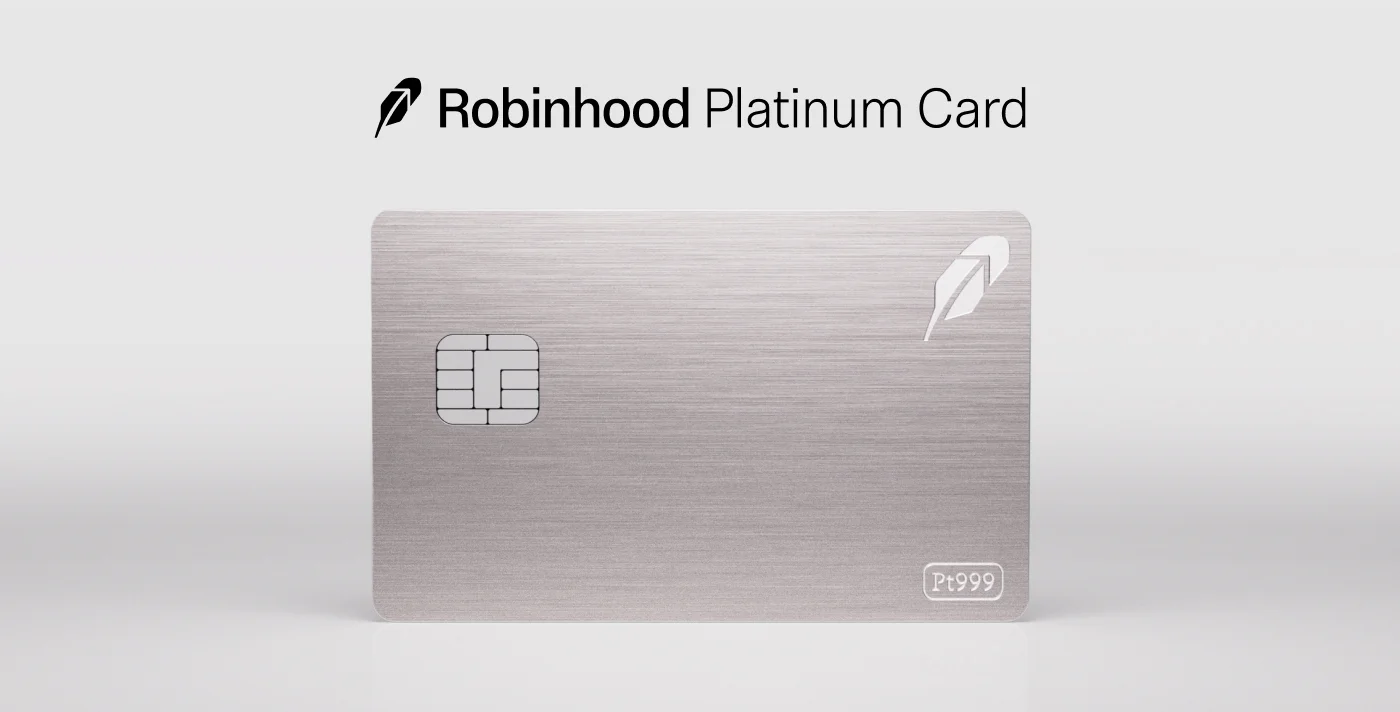
The rollout is official
Robinhood has started rolling out the Platinum Card — its $695 shot at the Amex Platinum and Chase Sapphire Reserve. The card is invite-only for now: you request access from the waitlist, and invitations are going out in waves. It’s issued by Coastal Community Bank on the Visa network, and a complimentary Robinhood Gold membership is bundled in.
Two launch details worth flagging up front: there is no welcome bonus — Robinhood is betting the ongoing rates and credits carry the pitch on their own — and redeeming cash back requires a Robinhood brokerage account, because rewards land there rather than as a statement credit.
The MaxWorth database now tracks 13 benefits worth $2,694 a year at face value on this card — before you count the earning rates.
A card made of actual platinum
The marketing tagline — “the actual Platinum Card” — is a straight jab at American Express. Robinhood’s card is stamped Pt999: the company says it’s plated in 99.9% pure platinum, whereas the Amex Platinum, for all its branding, is stainless steel. It’s a gimmick, but a well-aimed one, and it tells you exactly how this product wants to be read: same weight class as Amex, lower fee, younger buyer.
Earning: real cash back, with strings
- 10% back on hotels and rental cars booked through the Robinhood app
- 5% back on dining — up to $50,000 in eligible purchases per calendar year, then 1% — and on flights booked through Robinhood
- 1% back everywhere else
Two things make these rates more interesting than they first look. First, this is cash back, not points — no transfer partners to learn, no award charts to fight. Second, rewards sweep into your brokerage account, where they can sit as cash or be invested; for Robinhood’s core audience that’s a feature, not a limitation.
Now the strings. The 10% and the flight 5% only apply inside Robinhood’s own travel portal. Book direct with the hotel — where elite nights and status benefits live — and you’re back to 1%. And note the internal competition: Robinhood’s own Gold Card earns a flat 3% everywhere with no annual fee beyond Gold membership. Every dollar of non-category spend you put on the Platinum at 1% would have earned three times as much on the cheaper card. This is a card you carry alongside an everyday earner, not instead of one.
The credit stack, line by line
The travel side alone can total about $1,000 a year:
- $500 hotel booking credit — $250 every six months, stays of 2+ consecutive nights booked through Robinhood
- $300 flight credit — $150 every six months, applied to flights booked through the portal
- $120 Global Entry / TSA PreCheck credit — standard premium-card fare, once per program cycle
Then the monthly lifestyle slices:
- $250 dining credit — $20 a month at 15,000+ eligible restaurants, with a December top-up rounding out the year
- $250 autonomous rides credit — $20 a month toward driverless rides; the most 2026 benefit on any credit card
- DoorDash promotions and a DashPass membership — roughly $120 a year in value
Monthly slices are the industry’s favorite trick: face value assumes twelve-for-twelve redemption, and almost nobody hits that. The difference here is that dining and delivery credits are genuinely low-friction — you eat every month — while the rides credit depends entirely on whether Waymo-style services operate where you live.
The wellness bundle
This is the most distinctive part of the card, and the part most people will value at zero:
- WHOOP Peak membership with hardware — a $239/year value
- Function Health lab-testing membership — $365/year
- Amazon One Medical — $199/year
- Eight Sleep — up to a $1,000 one-time credit toward a Pod or Base
- An Oura membership rounds out the set
If you already pay for two of these, the bundle alone can cover the annual fee. If you weren’t going to buy any of them, none of this is money — it’s marketing. There’s no partial cash-out: the value only exists if the subscription fits your life.
How it stacks up against Amex and Chase
On paper, the pricing is aggressive. The Amex Platinum now runs $895 and leans on lounge access plus a maze of enrollment-gated credits; the Sapphire Reserve sits at $795 after its 2026 refresh, with its credits rebuilt around The Edit and merchant partners. Robinhood undercuts both at $695 while claiming a bigger headline credit number.
The honest differences:
- Lounges: Priority Pass (1,400+ lounges, unlimited) is solid but it isn’t Centurion Lounges or Chase Sapphire Lounges. Frequent flyers who care about lounge quality still have a reason to pay Amex.
- Travel earning: 10% back on portal hotels beats anything Amex or Chase pays — but portal bookings often forfeit hotel elite benefits, and portal pricing isn’t always the best available.
- Ecosystem: Amex sells you a travel program, Chase sells you a points ecosystem, Robinhood sells you its brokerage. The card is openly an acquisition and retention tool for the investing product — which is exactly why the economics can be this generous.
The fine print that matters
- Brokerage account required to redeem cash back — if you’d never open one, this card isn’t for you
- Portal lock-in on the elevated rates: 10% hotels, 5% flights, and both big travel credits all run through Robinhood’s travel platform
- $50,000 calendar-year cap on 5% dining, then 1%
- Invite-only for now, with no published timeline for open applications
- No welcome bonus, so the first-year math is the ongoing math
Our take
At $695, this undercuts the $895 Amex Platinum with higher headline rates and credits that are easier to actually use — monthly dining and delivery beat obscure enrollment-gated coupons, and cash back into a brokerage is cleaner than any points scheme. The wellness bundle is the wildcard: worth several hundred real dollars to the right person, worth nothing to everyone else.
Run the realistic math for yourself. A cardholder who books two portal hotel stays ($500), uses both flight credits ($300), and eats out monthly ($250) clears the fee on credits alone — before the 10%/5% earning and before any wellness subscription they’d have paid for anyway. A cardholder who books travel direct, skips the portal, and ignores the wellness perks is holding a 1% card with a $695 sticker.
That’s the pattern with every premium card in 2026: the sticker price buys a bundle, and the bundle only pays if it overlaps with the life you already live. Face value here is $2,694 — but your number is the one that matters. Track it for a couple of months before you join the waitlist.