How to Get Your First Credit Card With No Credit History: The Complete 2026 Playbook
Which cards actually approve applicants with zero credit history — Chase Freedom Rise, Discover it, BoA student cards, secured fallbacks — plus real approval data points, starting-limit expectations, the $250 checking-account trick, and a 12-month roadmap from first card to prime credit.

Why your first card matters
Every variable that matters in US credit — the age of your oldest account, your payment history, your relationship with the issuers who matter later — starts counting from your first card. Get it at 22 instead of 25 and, at 30, your credit file is literally three years stronger for the rest of your life. The first card is also the one you’ll likely keep open forever (it anchors your average account age), which is why picking a no-annual-fee keeper beats chasing a flashy bonus you don’t qualify for anyway.
The good news: 2026 is the easiest era yet to start from zero. Chase built a card specifically for people with no history, Discover’s no-history-friendly lineup survived its merger into Capital One, and every major issuer publishes a soft-pull pre-approval tool so you can check your odds without a hard inquiry. This guide covers who approves you, in what order to try, what limits to expect (with data points), and what to do in the twelve months after approval.
Three things to understand before you apply
1. You don’t have a score yet — and that’s fine. A FICO score requires at least one account open and reporting for six months; VantageScore appears after one or two. Starter-card underwriting doesn’t expect a score: it looks at income, your banking relationship, and whether anything negative exists. “No file” is a normal, approvable state. What’s harder is a damaged file — that’s a different playbook.
2. Issuers can see more than your (nonexistent) credit report. A checking account with the bank, direct deposit history, your stated income, your address stability — all of it feeds starter-card decisions. This is why the single most repeated data point for the Chase Freedom Rise is: having at least $250 in a Chase checking or savings account meaningfully improves approval odds — Chase says so itself.
3. If you’re under 21, the CARD Act applies. You must show independent income — wages, regular deposits, scholarships that cover more than tuition — not household income. Over 21, you may include household income you have reasonable access to (a spouse’s income counts; parents’ generally doesn’t unless deposited to you regularly).
The recommendation stack: try in this order
Tier 1 — no-deposit cards that approve zero history
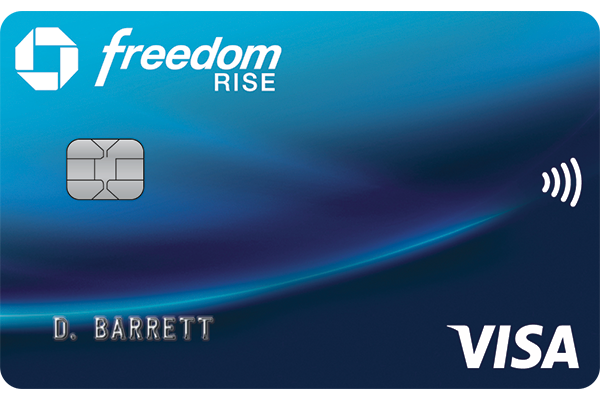
Chase Freedom Rise ($0 AF) — the default first card in 2026. Chase designed it explicitly for new-to-credit applicants: no history required, flat 1.5% cash back, and a current intro offer of 3% on dining for the first six months (on up to $6,000). Approved limits start at a guaranteed $500. Two structural advantages over every competitor: the $250 Chase-account approval boost gives you a concrete lever to pull before applying, and after about a year of on-time payments Chase automatically reviews you for an upgrade into the regular Freedom family — putting you inside the most valuable card ecosystem (Sapphire, Ultimate Rewards) years earlier than the old “wait until you have thick credit” route.
Discover it Student Cash Back / Discover it ($0 AF) — the classic zero-history yes. Discover has approved no-file applicants for a decade, guarantees at least a $500 limit on student cards, and its famous first-year Cashback Match doubles everything you earn (the 5% rotating categories effectively become 10% in year one). One 2026 caveat to know, not fear: Discover is now part of Capital One — most Discover it cards migrated to Capital One’s app in July 2026 and student cards follow in October — but the products, the 5% categories and the Match survive the move. Check Discover’s pre-approval tool first: it’s a soft pull.
Bank of America student cards ($0 AF) — the branch-friendly option. BoA’s student versions of Customized Cash (3% category of choice), Unlimited Cash (1.5%) and Travel Rewards approve students with no history — and BoA is the major bank most willing to open accounts in-branch without an SSN (bring a passport). If your long-term plan involves BoA’s Preferred Rewards ecosystem, starting the relationship here compounds.
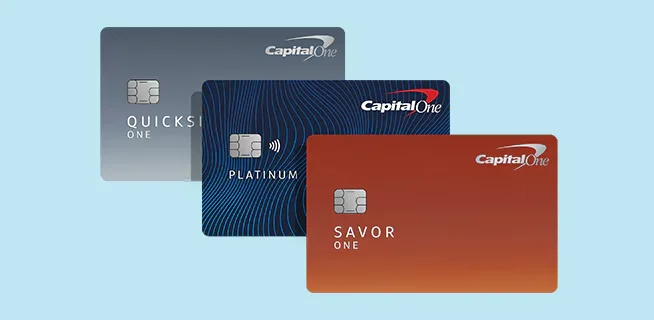
Capital One student cards / Platinum ($0 AF) — wide approval, one warning. Capital One’s Savor student card and the plain Platinum approve limited/no credit and accept ITINs. The community warning that comes with them: Capital One is known for “bucketing” — accounts opened with thin credit can get stuck with low limits that grow slowly, even after your profile improves. Fine as a first card; just don’t expect the limit to keep up with you.
Tier 2 — secured cards, the guaranteed fallback
If every Tier 1 card declines you (rare with no file, more common with a negative file):
- Capital One Platinum Secured — deposit $49, $99 or $200 (tier assigned by Capital One) for an initial $200 limit, expandable to $1,000 with a larger deposit. Credit-line reviews start around six months; the deposit comes back when Capital One graduates you to unsecured. Capital One Quicksilver Secured adds 1.5% cash back for a flat $200 deposit.
- Discover it Secured — historically the best secured card (2% gas/dining, Cashback Match, deposit back after a ~7-month review) — paused new applications on June 2, 2026 as part of the Capital One integration, with a relaunch signaled. If it’s back when you read this, it belongs at the top of this tier.
- Credit-union secured cards are the quiet third option — low deposits and human underwriting.
The accelerator — authorized user
Being added as an authorized user on a parent’s or spouse’s old, clean, low-utilization card imports that account into your file and can shortcut the age-of-history math. It stacks with (not replaces) your own card: your own account still needs its six months to mint your FICO score. Ask the primary holder to confirm the issuer reports AUs to the bureaus (the majors all do).
What to skip
Fintech “credit builder” cards churn: Petal closed to new applicants and became Tilt; Deserve wound down. Rent-reporting services and paid credit-builder loans are rarely worth it when a $0-fee Freedom Rise or Discover it is approvable. And avoid retail store cards as a first card — low limits, 30%+ APRs, and they anchor your file to a card you’ll never use.
Approval difficulty and data points
What the community record consistently shows:
- Starting limits: Freedom Rise, Discover it Student and Freedom Student all guarantee $500 minimum; typical first limits run $500–$1,500, scaling with stated income. Secured limits equal your deposit tier ($200 standard).
- The Freedom Rise lever: Chase itself confirms an existing Chase relationship with $250+ on deposit within three days of applying improves approval odds for thin files. The practical play: open a Chase checking account (often with its own signup bonus), fund it, then apply.
- Discover’s pre-approval is a real signal: soft pull, and a “pre-approved” result converts to approval at very high rates in community reports. Capital One and BoA run equivalent tools. Always pre-qualify before burning a hard inquiry.
- Denials are appealable: every major issuer runs a reconsideration line. For no-file denials, the winning recon arguments are income documentation and an existing banking relationship — not pleading.
- Inquiry hygiene matters from day zero: each application is a hard pull that stings a thin file more than a thick one. One application, wait for the result, recon if declined, then — only if needed — move to the next issuer. Two hard pulls in a month on an empty file is already pushing it.
- Future-you cares about 5/24: Chase won’t approve most of its valuable cards once you’ve opened five cards in 24 months. Starting inside Chase (Freedom Rise) sidesteps the problem entirely — your first card is already a Chase card.
The 12-month roadmap after approval
- Day 1: set up autopay for the full statement balance. Payment history is the largest scoring factor, and autopay makes missing impossible. Then use the card for a couple of small recurring charges.
- Keep reported utilization under 10%. The statement balance is what reports — on a $500 limit, that means keeping the reported figure under $50. Heavy spender? Pay it down before the statement cuts. (Utilization has no memory; a high month doesn’t scar you, but a consistently low one keeps every scoring model happy.)
- Month 6: your FICO score exists. Ask for a credit-limit increase (soft pull at most issuers, including Capital One and Discover) — a higher limit mechanically lowers utilization.
- Months 6–12: consider card #2. A second no-fee card (the other Tier 1 issuer, or a 2% flat card) adds mix and total limit. Resist opening more than one or two in year one.
- Month 12: harvest the upgrades. Freedom Rise holders get reviewed for the Freedom family; secured holders should see graduation and deposits returned (Capital One: typically months 7–18). With a year of clean history and a real FICO score, cards like the Chase Sapphire Preferred and Capital One’s mainline products come into range — see our beginner hub for what’s next.
The mistakes that actually hurt
- Missing a payment — a 30-day late on a six-month-old file is devastating and stays for seven years. Autopay, always.
- Closing your first card later — it’s your oldest account; keep the no-fee keeper open forever.
- Applying shotgun-style — five applications in a week reads as desperation to every underwriter and litters a thin file with inquiries.
- Cash advances and carrying balances — starter APRs run 25–30%; interest converts a free credit-building tool into an expensive loan. Pay in full, every month.
- Chasing a premium card at month three — you’ll be declined, burn an inquiry, and gain nothing that waiting nine more months wouldn’t give you free.
No SSN? Not a US resident yet?
- Bank of America opens student accounts in-branch with a passport, no SSN.
- Capital One accepts ITINs on applications.
- Amex Global Transfer lets existing Amex holders in other countries open a US Amex using their home-country relationship — note the Nova Credit–Amex partnership ended in 2025, so Global Transfer is now the Amex route.
- International students: our dedicated guide, First Credit Card for International Students with a New SSN, covers the F-1/J-1 specifics, SSN timing and branch strategies in depth.
Our take
The first-card decision in 2026 has a clean default: open a Chase checking account with $250, apply for the Freedom Rise, set autopay, and let the account age. If Chase says no, Discover’s pre-approval tool and BoA’s student lineup approve the overwhelming majority of clean no-file applicants, and a $49-deposit secured card catches everyone else. What separates people with 750 scores at year three from everyone else isn’t which starter card they picked — it’s autopay, single-digit utilization, and not touching the oldest account. Start the clock now.
Card details, offers and approval policies verified August 2026 across issuer disclosures and multiple independent sources; starter-card terms change frequently — confirm on the issuer’s application page.
FAQ
Can I get a credit card with no credit history at all? Yes. Several mainstream issuers approve applicants with zero history: Chase Freedom Rise (built specifically for first-timers), Discover it and Discover it Student, Bank of America’s student cards, and Capital One’s student and Platinum cards. If those don’t work, secured cards approve almost everyone because your deposit is the bank’s collateral.
What credit limit will my first card have? Expect a modest start. Chase Freedom Rise, Discover it Student and Chase Freedom Student all guarantee at least $500; most first limits land between $500 and $1,500 depending on income. Issuers typically consider increases after about six months of on-time payments.
How long until I have a credit score? A FICO score — the one most lenders use — requires an account open and reporting for at least six months. VantageScore can appear within one to two months. So the clock on everything starts the day your first card reports; that’s the reason to get a card sooner rather than later.
Should I start with a secured card? Only if unsecured starter cards decline you. Chase Freedom Rise, Discover it and student cards from BoA and Capital One all approve no-history applicants without a deposit. Secured cards (Capital One Platinum Secured from a $49/$99/$200 deposit) are the reliable fallback — note that the Discover it Secured paused new applications in June 2026, with a relaunch planned.
Does becoming an authorized user build my credit? Yes — being added to a parent’s or spouse’s long-standing, low-utilization card imports that account’s history into your file, and it stacks with your own first card. It accelerates the age and payment-history components, but it doesn’t replace having your own account.
I’m under 21 or don’t have an SSN — can I still apply? Under 21, the CARD Act requires independent income (not household income) or a co-signer. Without an SSN, Bank of America will open student accounts in-branch with a passport, and Capital One accepts ITINs; if you hold an Amex in another country, American Express Global Transfer can bring you into US Amex — the Nova Credit–Amex partnership ended in 2025.
Frequently Asked Questions
Can I get a credit card with no credit history at all?
Yes. Several mainstream issuers approve applicants with zero history: Chase Freedom Rise (built specifically for first-timers), Discover it and Discover it Student, Bank of America's student cards, and Capital One's student and Platinum cards. If those don't work, secured cards approve almost everyone because your deposit is the bank's collateral.
What credit limit will my first card have?
Expect a modest start. Chase Freedom Rise, Discover it Student and Chase Freedom Student all guarantee at least $500; most first limits land between $500 and $1,500 depending on income. Issuers typically consider increases after about six months of on-time payments.
How long until I have a credit score?
A FICO score — the one most lenders use — requires an account open and reporting for at least six months. VantageScore can appear within one to two months. So the clock on everything starts the day your first card reports; that's the reason to get a card sooner rather than later.
Should I start with a secured card?
Only if unsecured starter cards decline you. Chase Freedom Rise, Discover it and student cards from BoA and Capital One all approve no-history applicants without a deposit. Secured cards (Capital One Platinum Secured from a $49/$99/$200 deposit) are the reliable fallback — note that the Discover it Secured paused new applications in June 2026, with a relaunch planned.
Does becoming an authorized user build my credit?
Yes — being added to a parent's or spouse's long-standing, low-utilization card imports that account's history into your file, and it stacks with your own first card. It accelerates the age and payment-history components, but it doesn't replace having your own account.
I'm under 21 or don't have an SSN — can I still apply?
Under 21, the CARD Act requires independent income (not household income) or a co-signer. Without an SSN, Bank of America will open student accounts in-branch with a passport, and Capital One accepts ITINs; if you hold an Amex in another country, American Express Global Transfer can bring you into US Amex — the Nova Credit–Amex partnership ended in 2025.