Capital One Transfer Partners 2026: All 22 Ratios
All 22 Capital One transfer partners and their exact ratios, the 1:1 cash-back-to-miles door, and three 2026 devaluations old guides still recommend.

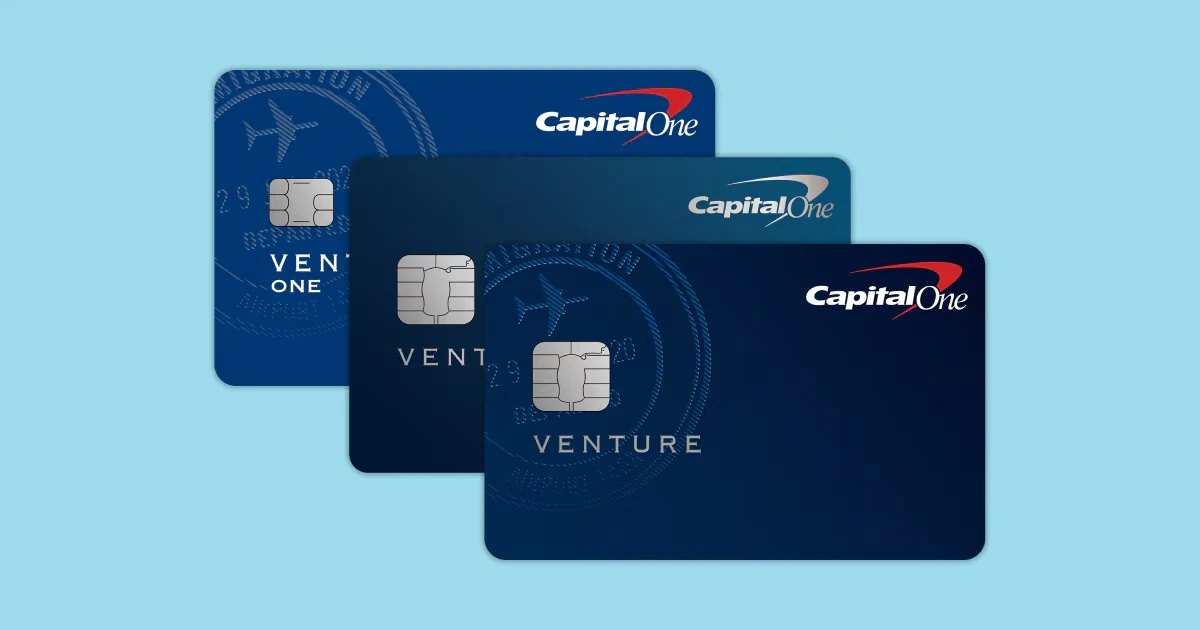
The short version
Capital One’s ecosystem can be summed up in one line: the easiest points to earn, the hardest points to spend well.
Earning takes almost no thought. Most of the cards pay a flat 2 miles per dollar — no rotating categories, no quarterly activation, no caps. But spending is where Capital One diverges sharply from Chase and Amex: its own travel portal gives you no redemption bonus at all.
Chase’s Sapphire Reserve once paid 1.5x in its portal. Amex has Fine Hotels & Resorts and its own soft premiums. In Capital One Travel, a mile is worth one cent, full stop. Which means there is no comfortable middle tier here — you either accept the 1-cent floor, or you learn to transfer.
Here’s what the same pile of miles is actually worth:
| How you spend it | Value per mile | 100,000 miles ≈ |
|---|---|---|
| Cash out / statement credit | 0.5¢ | $500 |
| Gift cards / Amazon / PayPal | 0.8¢ | $800 |
| Capital One Travel bookings | 1.0¢ | $1,000 |
| Erasing a travel purchase (90 days) | 1.0¢ | $1,000 |
| Hotel partners (Choice / Wyndham) | 1–3¢ | $1,000–3,000 |
| Airline partners (economy, booked well) | 1.5–2.5¢ | $1,500–2,500 |
| Airline partners (long-haul business) | 4–6¢ | $4,000–6,000 |
Top to bottom, that’s a spread of more than 10x. And the overwhelming majority of cardholders never use anything below the first two rows.
This guide covers three things: how to actually choose among the 22 partners; a door between cash back and miles that most people don’t know is already sitting in their account; and which classic plays died in 2026, because following an outdated guide here costs real money.
1. Three structural differences from Chase and Amex
Difference one: no portal bonus, so transferring isn’t advanced play — it’s the only play
In the Chase ecosystem, someone who never touches transfer partners can still pull roughly 1.5 cents through Points Boost or, historically, the flat 1.5x. Amex has its own softer premiums.
Capital One has no such layer. One cent is one cent. So for a Capital One cardholder, transferring isn’t optional — it’s the only upward slope on the value curve. Skip it, and your card returns 2 miles per dollar × 1 cent = a flat 2% cash back, which is what a no-annual-fee 2% card gives you for free. Except you paid an annual fee.
Flip that around, though, and the universal 2x becomes genuinely powerful: every single purchase compounds at 2+ cents. The Chase Sapphire Preferred earns 1x outside its bonus categories. Amex Gold earns 1x outside dining and groceries. Capital One earns 2x on everything. That’s the real weapon here — provided you know how to spend it.
Difference two: the partner list barely overlaps with the other two
Capital One’s roster includes several programs that are hard to reach elsewhere: Turkish Miles&Smiles (one of the cheapest ticketing windows into Star Alliance), Avianca LifeMiles (Star Alliance, no fuel surcharges), Choice Privileges (genuinely cheap hotels), EVA Air, and Accor.
It also misses several of the biggest names: no Marriott, no Hilton, no IHG, no United, no American, no Delta, no Hyatt. (Hyatt in particular is the single strongest reason people keep a Chase card alongside this one.) That’s a meaningful trade-off. If your core need is domestic hotel points, Capital One can’t help you. What it’s good at is international long-haul flights and a slice of value hotels.
Difference three: there’s a door between cash back and miles
This is the single most underused feature in the program, and section 2 covers the mechanics: Capital One lets you move cash back earned on a cash-back card into your miles account at 1 cent = 1 mile, for free, instantly, with no cap. No other issuer is built this way.
What it means in practice: Savor’s 3% on dining, entertainment and streaming; SavorOne’s 3% on groceries; Quicksilver’s flat 1.5%; Spark Cash’s 2% on business spend — all of it can be read as 3 miles, 1.5 miles and 2 miles per dollar, and all of it can end up on an airline.
2. The gate: who can transfer, and how to combine
Cards that can transfer
You need at least one miles card in your name. These carry transfer ability:
- Capital One Venture X ($395)
- Capital One Venture Rewards ($95)
- Capital One VentureOne ($0)
- Capital One Venture X Business
- Capital One Venture Business
- Capital One VentureOne Business
- Capital One Spark Miles cards
Pure cash-back cards — Savor, SavorOne, Quicksilver, QuicksilverOne, Spark Cash — cannot transfer on their own. But if you hold any card from the list above, you can move their balances over.
How combining works
Use “Combine rewards” in your Capital One account: pick the source account, the destination account, enter an amount, submit. The details that matter:
- The rate is 1 cent of cash back = 1 mile, with no haircut
- Free, with no limit on frequency or amount
- Effectively instant
- Personal and business accounts can combine with each other — Venture X Business and a personal Quicksilver move freely
- Any accounts under the same name can pass rewards between them
Why this matters: a no-annual-fee Savor earns 3% at restaurants, which becomes 3 miles per dollar once combined into Venture X. If those miles eventually go to Avianca for a transatlantic business class seat at 4 cents apiece, that dinner returned 12%. That isn’t a theoretical number — it’s what two cards sitting side by side already do.
Which is why the efficient Capital One setup is never one card. It’s an annual-fee miles card plus a no-annual-fee cash-back card.
The rules of transferring itself
- 1,000-mile minimum, in 1,000-mile increments after that
- One-way and irreversible — once transferred, the miles belong to the airline, and Capital One cannot claw them back
- Most airlines post nearly instantly; a few take 24–36 hours; hotel partners typically run 24 hours to 2 business days
- Once they land, the partner’s rules apply — expiration policy, family pooling, whether you can book for other people
The irreversibility deserves repeating: lock down the exact flight and date on the airline’s site, confirm the mileage and the taxes, and only then come back and transfer. Reverse that order and the loss is permanent.
3. All 22 transfer partners
18 airlines
| Airline | Ratio | Speed | Quick take |
|---|---|---|---|
| Air Canada Aeroplan | 1:1 | Instant | Star Alliance workhorse; flexible routing rules and stopovers |
| Avianca LifeMiles | 1:1 | Instant | No fuel surcharges on Star Alliance; cheap US–Europe business |
| Air France-KLM Flying Blue | 1:1 | Instant | SkyTeam workhorse; monthly Promo Rewards discounts |
| Turkish Miles&Smiles | 1:1 | Instant | Cheap Star Alliance ticketing, but heavily revised in late 2025 |
| British Airways Club | 1:1 | Instant | Gateway to the Avios pool; cheap short-haul and intra-Europe |
| Qatar Airways Privilege Club | 1:1 | Instant | Also Avios; the direct route to Qsuite business class |
| Finnair Plus | 1:1 | Instant | Also Avios; occasionally holds unique low-priced routings |
| Cathay | 1:1 | 24 hours | Asia-Pacific travel; watch the fuel surcharges |
| Singapore KrisFlyer | 1:1 | Instant | Singapore’s own premium cabins are members-only — high value |
| Etihad Guest | 1:1 | Instant | Occasional partner bargains; clunky website |
| Qantas Frequent Flyer | 1:1 | Instant | Australia and New Zealand; Oneworld |
| TAP Air Portugal Miles&Go | 1:1 | Instant | European gateway via Lisbon |
| Aeromexico Rewards | 1:1 | Instant | Mexico and Central America |
| Virgin Red | 1:1 | Instant | Feeds Virgin Atlantic Flying Club; very cheap US–Europe economy |
| Emirates Skywards | 4:3 | Instant | Devalued 25% on January 13, 2026 |
| EVA Air | 4:3 | 36 hours | Asia via Taipei; family-account friendly |
| Japan Airlines | 4:3 | Instant | Japan routes; complicated partner award rules |
| JetBlue TrueBlue | 5:3 | Instant | The worst ratio here; only worth it during a big bonus |
4 hotel programs
| Hotel | Ratio | Speed | Quick take |
|---|---|---|---|
| Choice Privileges | 1:1 | 24 hours | Low-rate properties often clear 1¢; some European surprises |
| Wyndham Rewards | 1:1 | Instant | Huge global footprint, but the Vacasa play is over |
| Accor Live Limitless | 2:1 | 2 business days | ALL points are fixed at ≈€0.02, so this lands just above the floor |
| I Prefer Hotel Rewards | 1:2 | Instant | The ratio flatters it; the underlying point is weak, so it nets out near the floor |
Accor and I Prefer are the two easiest ratios to misread. Accor takes 2 miles for 1 point, but Accor points are fixed-value (roughly 2,000 points = €40), which works out to about 1.1–1.2¢ per mile — better than the floor, but nothing thrilling. I Prefer gives 2 points per mile, but its own point is worth very little, so it also lands around 1¢. Reading the ratio without reading the point value is the most common way people miscalculate a transfer.

4. The four floors, for when you don’t transfer
Not every mile deserves to sit in your account waiting for a business class seat. There are reasonable everyday uses — you just need to know which floor you’re standing on:
| Redemption | Rate | Notes |
|---|---|---|
| Capital One Travel (flights, hotels, cars) | 1.0¢ | Direct redemption in the portal, no bonus |
| Erase a travel purchase (Purchase Eraser) | 1.0¢ | Only within 90 days of an eligible travel charge; posts as a statement credit in 2–3 business days |
| Gift cards / Amazon / PayPal | 0.8¢ | A 20% haircut; fine in a pinch |
| Cash out / statement credit | 0.5¢ | Half value. Don’t, unless you have to |
Watch the 90-day window on Purchase Eraser. The mechanic is: you pay for a flight, hotel or rideshare on the card normally, then within 90 days you go into your account, select that charge, and cover it with miles. Past 90 days, it’s no longer eligible. People trip over this every year — especially anyone saving up to “erase a bunch at once,” because by the time the balance is big enough, the earliest charges have expired.
Is the portal itself any good?
Yes, but for different reasons than at other issuers. It’s powered by Hopper and comes with three genuinely useful tools:
- Price prediction — tells you whether to buy now or wait, with Capital One citing average savings of around 15%
- Price freeze — lock a fare for up to 14 days for a small fee
- Price drop protection — if the system said “buy now” and the fare falls within 10 calendar days, the difference comes back as travel credit, capped at $50
Add Venture X earning 10x on hotels and rental cars, 5x on flights and vacation rentals in the portal, plus the $300 annual travel credit that has to be spent there, and it’s genuinely valuable for anyone who was going to pay for travel anyway. Its only weakness is the missing redemption bonus: you earn a lot, you spend at par.
5. What happened in 2026: three answers that are now wrong
The point of this section is blunt: a large share of the Capital One guides online are still describing 2024, and following them will cost you money.
1. Emirates transfers lost 25% (January 13, 2026)
As of January 13, 2026, Capital One transfers to Emirates Skywards moved from 1:1 to 1,000 : 750 — a 4:3 ratio. This followed Amex making a similar cut. Emirates first class was one of the few places in this ecosystem where miles reached truly outsized value, so the math needs redoing: not unusable, but 33% more expensive to reach.
2. Venture X lounge access tightened (February 1, 2026)
This doesn’t touch miles, but it directly affects whether the $395 still pencils out:
- Authorized users no longer get lounge access automatically — it’s now $125 per authorized user, up to four
- The primary cardholder no longer brings guests into Capital One Lounges or Landings by default. Below the spend threshold, guests cost $45 per adult and $25 per guest 17 and under; under-twos are still free
- Exception: spend $75,000 in a year (per calendar year, per account) and the old treatment returns (2 guests at a Lounge, 1 at a Landing), valid for that year and the next
- Priority Pass guests now cost $35 each — that’s the personal Venture X; Venture X Business still brings two guests free
For a solo business traveler, this barely registers. For the family that used one card to walk everyone into the lounge, it’s a real downgrade worth re-pricing before renewal.
3. Two heavily-cited sweet spots no longer exist
- Turkish’s 10,000-mile Hawaii awards: dead. On December 3, 2025, Turkish moved US mainland–Hawaii awards onto a separate chart at 25,000 / 40,000 / 50,000 miles, an increase of up to 167%. The same revision raised same-country nonstop partner awards across Star Alliance by 50%.
- Wyndham’s 15,000-point Vacasa rentals: dead. After Vacasa was sold to Casago, the partnership ended — no new point bookings after November 30, 2025, and existing reservations only honored through January 31, 2026.
These two were the most frequently cited examples in Capital One guides for years. If you find a 2026 article still recommending them, that article hasn’t been updated.
6. What still works, organized by trip
Everything below still holds in 2026. Award pricing moves, so always confirm current pricing on the airline’s own site before transferring — the numbers here are for order of magnitude.
US ↔ Europe, business class
This is where Capital One is strongest.
- Avianca LifeMiles — transatlantic business in the low-to-mid 60,000s one way, and crucially, no fuel surcharges on Star Alliance partner awards, so taxes usually run a few tens of dollars. The cost is weak service: if a partner flight cancels, rebooking support is close to nonexistent. Transfer close to departure (within about two weeks) to limit how long you’re exposed.
- Air France-KLM Flying Blue — Saver business around 60,000 miles, and monthly Promo Rewards (commonly 25% off; US–Europe economy has appeared under 19,000 miles one way). The play is checking the discount list at the start of each month, then deciding whether to transfer.
- The Avios pool (British Airways / Iberia / Qatar / Finnair) — all four share Avios, and once your accounts are linked you can move balances between them. Iberia prices US East Coast to Madrid in business around 34,000 Avios one way off-peak, one of the most durable values in the whole currency. Strategy: transfer Capital One miles into whichever of the four you can, then shift internally to whoever prices your route cheapest.
Middle East and Asia-Pacific long-haul
- Qatar Airways Privilege Club — Qsuite is widely considered the best business class flying, and North America to Doha on Qatar’s own metal is one of the few top-tier products Capital One reaches directly.
- Singapore KrisFlyer — Singapore reserves its best first and business class inventory for its own members, and this is a direct pipeline into it.
- EVA Air / Cathay / Japan Airlines — the standard Asia options. Remember EVA and JAL are 4:3 now, so discount before you compare.
Europe and short-haul
- British Airways Avios — distance-based pricing rewards short segments; a few thousand Avios covers a hop.
- Virgin Red → Virgin Atlantic Flying Club — US–Europe economy can price remarkably low on the right dates, but the taxes are high, so compare total cost, not just the mileage.
Hotels
- Choice Privileges — 1:1, and Choice holds a set of European properties with decent quality and non-trivial cash rates, so redemptions often clear 1¢ comfortably. Check here first on the hotel side.
- Wyndham Rewards — 1:1, huge global footprint, flat-tier pricing. With Vacasa gone, it’s a solid-but-unexciting option.
- Accor / I Prefer — as covered above, both land in the 1–1.2¢ range. These are floors, not sweet spots.
7. Transfer bonuses: how to catch them without being led by them
Capital One runs periodic transfer bonuses, most often to Avianca LifeMiles, Turkish Miles&Smiles, Cathay, Virgin Red and EVA Air.
The rough pattern:
- Avianca is bonused most frequently — roughly once a quarter
- Flying Blue is the most-bonused airline in the industry, with Amex, Chase, Citi and Capital One all taking turns
- Turkish bonuses tend to be the largest, historically reaching 40–50%
- Typical size lands in the 15–30% range
But hold one line: a bonus is not a reason to transfer. Award space is.
A 30% bonus is worthless if you transfer and then discover there’s no award seat on your dates — those miles are now stranded in the airline’s account. They can’t come back to Capital One, and they can’t move to another airline. The correct order never changes:
- Find bookable award space on your exact dates, on the airline’s site
- Note the mileage required and the total taxes
- Transfer from Capital One (catching a bonus if one happens to be live)
- Ticket immediately
As of this update, Capital One has a 15% bonus to Avianca LifeMiles running. These windows are short — check Capital One’s current promotions page rather than trusting this line.
8. The card matrix: which one earns, which one transfers
| Card | Annual fee | Earning | Role in the ecosystem |
|---|---|---|---|
| Venture X | $395 | 2x everything; 10x portal hotels/cars, 5x portal flights | Main transfer account plus high portal multipliers |
| Venture Rewards | $95 | 2x everything; 5x portal hotels/cars | The lighter version of the same role |
| VentureOne | $0 | 1.25x everything; 5x portal hotels/cars | Free way to keep transfer eligibility alive |
| Savor | $0 | 3% dining, entertainment, streaming, groceries | Cash-back card; 3 miles/$1 once combined |
| Quicksilver | $0 | 1.5% everything | Cash-back card; 1.5 miles/$1 once combined |
| Spark Miles / Spark Cash | Varies | Business spend | Business-side earning that combines with personal accounts |
Doing the math on Venture X’s $395
The fee looks steep until you break it down:
- $300 annual Capital One Travel credit (must be spent in the portal)
- 10,000 miles every card anniversary (worth $100 at the 1¢ floor, more if transferred)
If you’d spend that $300 on travel anyway, the fee is covered on paper and the lounges and 10x are upside. But the February 2026 lounge changes removed the “bring the family” part — if that was your original reason for the card, run the numbers again.
The efficient pairings
VentureOne (free) + Savor (free) — zero annual fee, 3% dining, and transfer eligibility intact. Right for anyone who doesn’t need lounges and just wants everyday spend to become international flights.
Venture X + Savor — 10x portal, the $300 credit, 10,000 anniversary miles and 3x dining all at once. This is the best-known combination for a reason.
9. Six ways people lose money here
1. Cashing miles out. 0.5 cents is a 50% haircut. If cash is what you actually want, put the spend on Savor or Quicksilver from the start rather than earning miles and discounting them back into cash.
2. Transferring before finding award space. It’s irreversible. This appears three times in this article because it’s the single largest and most permanent loss available.
3. Holding a cash-back card and never combining. Enormous numbers of Savor holders spend that 3% as cash and have never opened “Combine rewards.” It is the most overlooked free value in the program.
4. Applying Chase or Amex habits here. There is no 1.25x, no 1.5x, no portal multiplier. One cent is the ceiling. Anyone waiting for a comfortable no-effort redemption will wait forever.
5. Following an outdated guide. Turkish to Hawaii, Wyndham’s Vacasa rentals, 1:1 Emirates — all history. Spending two minutes confirming the current ratio and current award price on the partner’s own site is the highest-return two minutes in this hobby.
6. Forgetting the 90-day Purchase Eraser limit. To cover a travel charge with miles, you have to do it within 90 days of the charge posting. Saving up until “later” is how people quietly lose value.
10. Running the actual numbers
Take a household spending $60,000 a year on cards — roughly $15,000 across dining and groceries, and $45,000 on everything else.
Setup: Venture X + Savor (combined annual fee $395)
- Savor covers $15,000 of dining and groceries at 3% = $450 cash back → 45,000 miles after combining
- Venture X covers the remaining $45,000 at 2x = 90,000 miles
- Card anniversary bonus = 10,000 miles
- Total for the year ≈ 145,000 miles
Three possible fates for those 145,000 miles:
| How you spend it | Value | After the $395 fee |
|---|---|---|
| Cash out (0.5¢) | $725 | $330 |
| Portal or Purchase Eraser (1¢) | $1,450 | $1,055 (plus the $300 credit and lounge access) |
| Transfer to Avianca or Flying Blue for two US–Europe business seats (4¢) | ≈$5,800 | ≈$5,405 |
Same spending, same cards, same year — a 16x difference. The variable isn’t how much you charged. It’s which button you press at the end.
For how the same math plays out at the other two big issuers, see our guides to Chase Ultimate Rewards and Amex Membership Rewards — and the full set lives under Points & Transfer Partners.
Capital One made earning simple enough that you never have to think about it. The trade-off is that it moved all of the complexity to the redemption side — which is exactly where the value lives.
Frequently asked questions
Do Capital One miles expire?
Not as long as your account is open and in good standing. But once transferred to an airline or hotel, the partner’s expiration rules apply — some programs require account activity every 18–24 months. This is a step people routinely forget after transferring.
Can I give my miles to someone else?
Capital One accounts can only combine within the same person’s name. But after transferring to an airline, many partners let you book award tickets for other people (Avianca, Flying Blue and Aeroplan all do), which is the normal route to gifting a seat.
What happens if I don’t use the Venture X $300 travel credit?
It doesn’t roll over — it resets at your card anniversary. If you travel less than $300 a year, price the card as $395 minus whatever you actually use.
Did the Discover acquisition change anything?
Nothing on the miles side so far. Transfer partners and ratios are unaffected. Integration of the Discover card lineup is still in progress, and it’s a separate track from how miles are earned and redeemed.
Where should a beginner start?
Three steps. First, check whether you hold a card that can transfer — if not, a no-annual-fee VentureOne keeps the door open. Second, open “Combine rewards” and consolidate any cash-back balances into the miles account. Third, pick one route you’ll genuinely fly in the next 12 months and price it on Avianca’s or Flying Blue’s site. Only after you’ve looked up a real award once will you believe what this ecosystem is actually worth.
Frequently Asked Questions
How much is a Capital One mile worth?
It depends entirely on how you spend it, and the spread is more than 6x. Cashing out pays 0.5 cents — that's the floor. Gift cards, Amazon and PayPal checkout pay 0.8 cents. Booking through Capital One Travel, or erasing a travel purchase from the last 90 days, pays 1 cent. Transfer to an airline partner and book well, and you're commonly at 2–4 cents, with long-haul business class reaching 5–6 cents. The same 100,000 miles is either $500 or a business class seat that sells for four to five thousand dollars.
Can I transfer miles if I only have a cash-back card like Savor or Quicksilver?
Not directly, but there's a near-frictionless workaround. As long as you also hold a miles card (Venture, Venture X, VentureOne, Spark Miles, Venture X Business and so on), you can combine your cash-back balance into the miles account at 1 cent = 1 mile. It's free, instant and uncapped. That means Savor's 3% on dining is effectively 3 miles per dollar inside the ecosystem.
How many Capital One transfer partners are there, and are they all 1:1?
Twenty-two: 18 airlines and 4 hotel programs. Most are 1:1, but six are not. Emirates, EVA Air and Japan Airlines are 4:3 (Capital One writes it as 2:1.5), JetBlue is 5:3, Accor is 2:1, and I Prefer runs the other way at 1:2. The minimum transfer is 1,000 miles, and most airlines post nearly instantly.
What changed for the worse in 2026?
Three things. On January 13, 2026, transfers to Emirates Skywards dropped from 1:1 to 4:3 — a 25% devaluation. On February 1, 2026, Venture X lounge access tightened: authorized users no longer get access automatically (it's $125 each now), and the primary cardholder no longer brings guests unless the account spends $75,000 a year. And two sweet spots that appear in countless older guides are gone: Turkish's 10,000-mile Hawaii awards and Wyndham's 15,000-point Vacasa rentals.
Is Capital One Travel worth booking through?
Yes, but understand what it is. Powered by Hopper, it offers price prediction, price freeze for up to 14 days, and price drop protection for 10 days after booking (capped at $50 in travel credit). Venture X earns 10x on hotels and rental cars and 5x on flights and vacation rentals there, and the $300 annual travel credit has to be spent inside it. What it does not do is boost your redemption rate — a mile is worth exactly 1 cent in the portal, no more.
What's the one rule to follow before transferring?
Confirm on the airline's own site that award space exists on your exact dates, and note the mileage and the taxes, before you move a single mile. Transfers are one-way and irreversible — neither Capital One nor the airline will move them back. This rule matters more than any sweet spot in this article.