Chase Ultimate Rewards in 2026: Why the Same Points Are Worth 1 Cent or 6
Chase rebuilt the entire Ultimate Rewards redemption system in 2026. The Reserve's 1.5x and the Preferred's 1.25x fixed rates are gone, replaced by variable Points Boost pricing, and Hyatt transfers dropped to 4:3 on the Preferred and Ink Preferred. All 14 transfer partners, the redemptions actually worth chasing, and the deadline on legacy 1.5x points.


The short version
If you remember one thing: Chase points no longer have a stable, knowable value.
For years the logic was simple. Hold 100,000 points, book through Chase Travel with a Sapphire Reserve, get a flat 1.5 cents, walk away with $1,500. No research required. That floor is a big part of why people picked Chase over Amex — you couldn’t really lose.
That floor is gone as of 2026. The Reserve’s 1.5x and the Preferred’s 1.25x were both retired in favor of Points Boost, a variable system where the same dollar of travel might redeem at 2 cents, 2.5 cents, or 1 cent depending on which specific hotel or flight you picked. The difference between shopping around and not is now the difference between 2.5 cents and 1.
Meanwhile transfers matter more than they used to. The same points, four ways:
| How you spend it | Cents per point | 100,000 points ≈ |
|---|---|---|
| Cash back / statement credit | 1.0 | $1,000 |
| Chase Travel, standard | 1.0 | $1,000 |
| Points Boost, good targets | 1.5–2.0 | $1,500–2,000 |
| Points Boost, top hotels | 2.5 | $2,500 |
| Transfer partners, done right | 3–6+ | $3,000–6,000+ |
That is a three-to-sixfold spread. This guide is about where it comes from and how to land on the right end of it.
What actually changed in 2026
Three things, in order of how much they affect you.
1. Fixed redemption rates were replaced by Points Boost
This is the structural one. Chase Travel used to price redemptions by card — 1.5 cents on the Reserve, 1.25 on the Preferred, 1 cent on the Freedom cards — and it applied to everything.
Now Chase selects specific hotels and flights and gives those a redemption multiplier, flagged as Points Boost in search results. The official ceiling is 2 cents per point, with a small set of hotels on Chase’s curated list reaching 2.5. Anything not selected redeems at 1 cent.
The practical meaning: Chase converted redemption value from a promise made to everyone into a reward for people willing to compare. If you research, your ceiling went up from 1.5 to 2.5 cents. If you don’t, your floor fell from 1.5 to 1.
2. Hyatt transfers were cut 25% on two cards
Hyatt has always been the most valuable partner in the Chase lineup. That is still true, but it now depends on which card holds your points.
| Card | Hyatt ratio | Effective |
|---|---|---|
| Chase Sapphire Reserve | 1:1 (unchanged) | — |
| Chase Sapphire Preferred | 4:3 | New applicants June 15, 2026; existing cardholders October 1, 2026 |
| Ink Business Preferred | 4:3 | October 1, 2026, everyone |
At 4:3, four Chase points buy three Hyatt points — a straight 25% haircut on every point you move.
If you hold a Preferred or Ink Preferred and use Hyatt, there is a clear window: move what you need before October 1, 2026. Don’t overshoot, though. Transfers are irreversible, and over-transferring just strands points in a Hyatt account.
The other 13 partners all remain 1:1, including every airline. This is still an area where Chase is cleaner than Amex, which has a pile of 1000:800-style ratios.
3. The Sapphire Preferred was overhauled
On June 15, 2026 the Preferred was refreshed top to bottom, with the annual fee held at $95:
- New 3x on gas and EV charging
- New 3x on vacation rentals — Airbnb, Vrbo, and similar
- Hotel credit doubled, $50 to $100 per cardmember year, for hotels booked through Chase Travel
- The 1.25x fixed rate was retired into Points Boost
- The 10% anniversary points bonus was discontinued for anyone applying on or after June 15, 2026; existing cardholders keep it
The gas category is a bigger deal than it sounds. Fuel was a long-standing hole in the Ultimate Rewards lineup that people patched with a card from another issuer. A single Preferred now covers dining, online groceries, streaming, gas, vacation rentals, and travel.
Where your points come from
Worth covering earning briefly, because not all Ultimate Rewards points are transferable — and that catches people out.
| Card | Main earning | Transfers? |
|---|---|---|
| Sapphire Reserve | 8x Chase Travel / 4x flights & hotels booked direct / 3x dining | ✅ |
| Sapphire Preferred | 5x Chase Travel / 3x dining, online groceries, streaming, gas, vacation rentals | ✅ |
| Ink Business Preferred | 3x travel, shipping, internet, cable, phone, advertising | ✅ |
| Freedom Flex | 5x rotating categories ($1,500/quarter) / 5x Chase Travel / 3x dining & drugstores | ⚠️ Combine first |
| Freedom Unlimited | 1.5x everything / 5x Chase Travel / 3x dining & drugstores | ⚠️ Combine first |
| Ink Business Cash | 5x office supplies & telecom ($25,000/year) / 2x gas & dining | ⚠️ Combine first |
| Ink Business Unlimited | 1.5x everything | ⚠️ Combine first |
| Ink Business Premier | — | ❌ Cannot transfer |
“Combine first” means those no-annual-fee cards can’t transfer on their own, but if you also hold a Reserve, Preferred, or Ink Preferred, you can move points into it and transfer from there. Combining is free, instant, and lossless.
That is the whole logic behind the classic Chase trifecta: let the no-fee cards do the high-multiplier earning, then pool everything into one annual-fee card to spend.
Ink Business Premier is the one dead end. Its points redeem for cash only. Worth knowing before you apply.
You can also transfer points to one household member (or a joint business owner) for free. This matters more than it used to — if someone in your household holds a Reserve, moving points to them preserves the 1:1 Hyatt ratio that your Preferred no longer has.
Building the trifecta
Minimum viable setup: Preferred + Freedom Unlimited, $95 total. The Freedom Unlimited’s 1.5x floor beats any 1x card by half on everything uncategorized; the Preferred handles the 3x categories and serves as the transfer outlet.
Add a Freedom Flex, still $95. The rotating 5x runs up to $1,500 in spend per quarter — 30,000 points a year if you max it. No annual fee, so there is no downside beyond remembering to activate each quarter.
When to move up to the Reserve. It comes down to how much you put through Chase Travel (8x vs 5x) and whether you use Hyatt. The 4:3 change gave the Reserve a concrete new argument: if you redeem several Hyatt nights a year, that 25% gap alone can cover the difference in annual fees.
Four ways to spend, worst to best
Tier 1: Cash back and statement credits (1 cent)
Easiest and worst. 100,000 points is $1,000, full stop.
Use it when you’re certain you have no travel plans and the points are otherwise idle, or the amount is too small to bother optimizing. Otherwise, spending points as cash means voluntarily giving up more than half their value.
Tier 2: Standard Chase Travel bookings (1 cent)
Flights, hotels, and cars booked through Chase Travel without a Points Boost multiplier now redeem at a flat 1 cent.
Its one real advantage is that the booking behaves like cash. You earn airline miles and elite credit on it, your airline benefits apply, and cancellation follows the airline’s normal rules. Award tickets booked through a transfer give you none of that.
So the role of standard redemption is narrow but real: when you need a ticket that behaves like a paid ticket, without paying cash.
Tier 3: Points Boost (1.5–2.5 cents)
The centerpiece of the new system. Look for the Points Boost flag while searching Chase Travel.
Three things worth knowing in practice:
It’s priced per property, not per category. Two hotels in the same city at the same price point, one boosted and one not, is completely normal. Filter for boosted options first, then choose among them — not the other way around.
It stacks with the Chase Travel hotel credit. The Preferred’s $100 and the Reserve’s Edit credit both apply to hotels booked through Chase Travel. Paying with boosted points and then absorbing the credit is the easiest high-value combination in the current system.
Don’t reshape your trip to chase it. 2.5 cents is appealing, but if capturing it means staying somewhere you wouldn’t have chosen or flying a routing that doesn’t work, the math stops working. The denominator in any redemption is money you were already going to spend, not the sticker price.
Tier 4: Transfer to partners (3–6+ cents)
The highest ceiling, and the only route that turns points into travel you would genuinely never have bought.
The cost is complexity: you need to understand each loyalty program, find award space, and accept the constraints of award tickets. Details below.
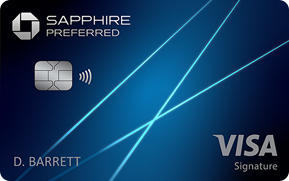
The 14 partners, and how to think about them
All 1:1, with Hyatt on the Preferred and Ink Preferred as the sole exception.
Fourteen is a short list next to Capital One’s 22 or Amex’s 21. It is also the most consistent of the three, and Hyatt alone keeps a Chase card in a lot of wallets that would otherwise have closed it.
Ten airlines
| Partner | What it’s for |
|---|---|
| Air Canada Aeroplan | The Star Alliance workhorse — most flexible rules, unusually cheap short-haul and stopovers |
| United MileagePlus | Widest US domestic coverage; dynamic pricing but the easiest award space to find |
| Southwest Rapid Rewards | Domestic point-to-point at a fixed rate that tracks cash prices |
| Virgin Atlantic Flying Club | Its partner chart hides some of the best redemptions anywhere |
| Air France-KLM Flying Blue | Europe, plus monthly discounted Promo Rewards |
| British Airways Executive Club | Cheap short-haul on a distance-based chart; brutal surcharges long-haul |
| Iberia Plus | US–Spain at far lower surcharges than BA |
| Aer Lingus AerClub | US–Ireland, same low-surcharge story |
| JetBlue TrueBlue | East Coast, fixed-rate, good for cheap fares |
| Singapore KrisFlyer | The only way to book Singapore’s own premium cabins |
Four hotels
| Partner | Ratio | What it’s for |
|---|---|---|
| World of Hyatt | 1:1 on Reserve / 4:3 on Preferred & Ink Preferred | By a wide margin the most valuable hotel partner |
| IHG One Rewards | 1:1 | Cheap points, but low value per point |
| Marriott Bonvoy | 1:1 | Broad footprint, heavily devalued currency |
| Wyndham Rewards | 1:1 | Occasional bargains at the low end |
One rule for hotels: only Hyatt is worth serious consideration. IHG, Marriott, and Wyndham points are typically worth 0.5–0.7 cents, so moving a 1-cent Chase point into them at 1:1 destroys value. Their real purpose is topping up — when you’re a few thousand points short of a free night and buying the gap beats paying cash.
Six redemptions actually worth chasing
Not an exhaustive list. These are the ones that move the needle.
1. Low-category Hyatt hotels (3,500–12,000 points)
Hyatt still publishes a fixed award chart, which in 2026 makes it an outlier — Marriott, Hilton, and IHG have all gone dynamic. Category 1 runs 3,500 points a night, and even in the US you can find off-season rooms in the $150–200 range at that level.
Why it’s the strongest use of Chase points: Hyatt doesn’t tack resort fees onto award stays, and Globalist members keep breakfast, upgrades, and late checkout on award nights. You’re redeeming for the full experience, not a discounted room.
2. Hyatt all-inclusives (20,000–25,000 points)
The Zilara and Ziva properties across Mexico and the Caribbean run 20,000–25,000 points a night with meals, drinks, and most activities included. Peak-season cash rates frequently land at $600–900.
This is the most repeatable 3-cent-plus redemption in the program. No first class award space to hunt, no obscure rules — book a few months out and it’s there. For families, this is probably the most practical use of Chase points, period.
3. Top-tier Hyatt resorts (30,000 points)
Park Hyatt Maldives Hadahaa and Alila Ventana Big Sur sit at 30,000 points a night against cash rates of roughly $900–2,000. That’s 3 to 6 cents per point, the ceiling of Hyatt redemptions.
The catch is availability. Plan on watching for these six months out.
4. Aeroplan short-haul: 6,000 points
Any Star Alliance-operated segment under 500 miles costs a flat 6,000 points one-way, regardless of cabin or date, as long as award space exists. SFO–LAX, BOS–YUL, ORD–DTW all qualify.
Among the cheapest award tickets in North America, and especially useful for the positioning flight that connects to a bigger redemption.
5. Aeroplan stopovers: 5,000 points
Aeroplan lets you add a stopover — more than 24 hours — to a one-way award for 5,000 points.
The power here is that “see a second city on the way” costs 5,000 points instead of a second ticket. Break a trip to Europe in Iceland for three days, pay 5,000 more points total. Most programs either prohibit stopovers or price them as two awards. This one is a genuine structural advantage.
6. Virgin Atlantic partner awards
Virgin’s own routes are unremarkable. Its partner chart is where the value lives:
- ANA first class to Japan, in the 55,000–60,000 point range round trip, against cash fares that routinely exceed $10,000
- Delta One to Europe, around 50,000 points
- Upper Class to New York, from 37,500 points
The ANA award is perennially cited as one of the best redemptions available anywhere, worth well into double-digit cents per point. Award space is genuinely hard to get — ANA typically releases seats 355 days out, and you need to be watching.
A few partners people misjudge
Flying Blue: watch the monthly promos. Flying Blue discounts a rotating set of routes 25–50% each month. If your destination lands on the list, the math suddenly looks excellent. The catch is that you don’t get to pick which routes, so it suits flexible travelers.
British Airways: great short-haul, terrible long-haul. BA prices by segment distance, which makes short direct flights genuinely cheap — often better on BA miles than on the operating carrier’s own program. But transatlantic surcharges routinely add several hundred dollars in cash to a business class award, which defeats the purpose entirely.
Iberia and Aer Lingus: same alliance, far lower surcharges. Both share routes with BA under much friendlier surcharge policies. Flying to Spain, price Iberia; flying to Ireland, price Aer Lingus. The savings against BA on the same metal are often in the hundreds.
Southwest: buy certainty, not a high rate. Southwest awards price at a fixed conversion, landing around 1.3–1.5 cents with no surprises in either direction. The value isn’t the rate — it’s no change fees, free bags, and award space on any seat that’s for sale. For family travel or plans that might shift, that reliability has its own worth.
Singapore KrisFlyer: the only door to Singapore’s own cabins. Singapore reserves its best premium inventory for its own members, so if you want the Suites or its business class, KrisFlyer is the only route. Note the 1–2 day transfer time; it is not instant.
Legacy Reserve holders: you have points on a clock
This deserves its own section because it expires, and a lot of people don’t know it exists.
If both of these are true:
- You applied for the Chase Sapphire Reserve before June 23, 2025
- You hold points earned before October 26, 2025
Then that balance can still be redeemed at 1.5x through Chase Travel until October 26, 2027.
Chase handles it automatically — at booking it compares Points Boost against the 1.5x rate and gives you whichever is better. Nothing to select, nothing to get wrong.
The important nuance: this covers an existing balance, not an ongoing benefit. Points earned after October 26, 2025 don’t qualify. So if you’re sitting on a large legacy balance with no specific transfer plan, spending it through Chase Travel before October 26, 2027 carries a guaranteed floor that your newer points don’t have.
When not to transfer
Transfers have the highest ceiling, but they’re not the answer to everything.
When the cash fare is already cheap. Burning 12,000 miles on an $89 domestic one-way sells your points at 0.7 cents. Award tickets only win when cash prices are high — long-haul, peak season, premium cabins.
When you need the miles and elite credit. Award tickets don’t earn either. If you’re chasing status this year, that ticket needs to be paid — or booked as a standard Chase Travel redemption, which does count as a paid fare.
When the trip isn’t confirmed. Transfers are irreversible, and this is the point worth repeating. Chase can’t claw them back and the airline won’t send them home. The only correct sequence is:
Confirm award space for specific dates and specific flights on the airline’s own site → note the mileage and taxes → transfer → book immediately.
Every hour between transfer and booking is time for someone else to take the seat. People who transfer first and look second end up sitting on an orphaned pile of miles.
When the target is IHG, Marriott, or Wyndham. As above — transferring 1:1 into a weaker currency is a net loss unless you’re topping up for a specific night.
Common mistakes
Spending points like cash. Statement credits, Amazon checkout, PayPal — all 1 cent or worse. This is the least valuable thing you can do with Ultimate Rewards.
Getting the Ink Business Premier and discovering points are stranded. Cash only, no transfers. Know that going in.
Never combining Freedom points. Plenty of people accumulate six figures on a Freedom Flex assuming they can transfer whenever. They can’t — not without an annual-fee card in the same household. Without one, those points are capped at 1 cent.
Preferred holders sleeping through October 1, 2026. The Hyatt 4:3 date. If Hyatt is part of your plans, move what you need before it.
Reshaping a trip to hit a redemption rate. Whether it’s 2.5 cents on Points Boost or 6 on Hyatt, the premise is that you were taking the trip anyway. Value captured by staying somewhere you didn’t want to stay isn’t value.
A decision table
When you’re sitting on points and not sure what to do:
| Question | Yes | No |
|---|---|---|
| Any travel planned in the next year? | ↓ continue | Hold them; don’t cash out |
| Is a Hyatt property an option? | Price Hyatt first, especially low categories and all-inclusives | ↓ continue |
| Long-haul, premium cabin, or peak season? | Price Aeroplan, Virgin, United transfers | ↓ continue |
| Any Points Boost targets on Chase Travel? | Book boosted, and absorb your hotel credit while you’re there | ↓ continue |
| Do you need miles or elite credit? | Standard Chase Travel redemption | Cash may simply be cheaper — save the points |
Finally
After the 2026 changes, Ultimate Rewards has a different personality. It went from a program where you couldn’t really lose to one that pays you for paying attention.
For people who want simplicity, that’s a downgrade — the 1.5 cent floor is gone and comparison shopping is now mandatory. For people willing to spend the time, it’s an improvement: the ceiling moved from 1.5 to 2.5 cents inside the portal, and transfers look better than ever by comparison.
Two things worth doing now:
- If you hold a Preferred or Ink Preferred and use Hyatt, move what you need before October 1, 2026.
- If you’ve held a Sapphire Reserve since before June 23, 2025, check how much of your balance predates October 26, 2025 — that portion keeps its 1.5x through October 26, 2027.
Compiled from Chase’s own announcements and public reporting across points communities as of August 2026. Transfer ratios, Points Boost multipliers, and award pricing all change without notice — confirm current terms with the airline and with Chase before redeeming.
Frequently Asked Questions
How much is a Chase Ultimate Rewards point worth?
It depends entirely on how you spend it, and the spread is enormous. Cash back and statement credits are 1 cent — that is the floor. Standard Chase Travel bookings are now also 1 cent. Points Boost gets you 1.5 to 2 cents, and 2.5 cents at a handful of hotels. Transfer to an airline or hotel partner and a good redemption lands at 3 to 6 cents or more. The same 100,000 points is either $1,000 or a business class ticket you would never have paid cash for.
What changed most about Chase redemptions in 2026?
The fixed rates disappeared. The Sapphire Reserve used to give 1.5 cents on anything booked through Chase Travel and the Preferred gave 1.25. Both now run on Points Boost, where the rate varies by individual hotel and flight — some hit 2 cents or even 2.5, and everything else sits at 1. Certainty was traded for a higher ceiling, and getting that ceiling now requires shopping around.
Did the Hyatt transfer ratio change?
Yes, but only on some cards. The Chase Sapphire Reserve still transfers 1:1. The Chase Sapphire Preferred and Ink Business Preferred moved to 4:3, which cuts the Hyatt value of every Chase point by 25%. For the Preferred it took effect June 15, 2026 for new applicants and October 1, 2026 for anyone approved before that date. For Ink Preferred it hits everyone on October 1, 2026.
Can legacy Reserve cardholders still get 1.5x?
Yes, with a hard deadline. If you applied for the Sapphire Reserve before June 23, 2025, the points you earned before October 26, 2025 can still be redeemed at 1.5x through Chase Travel until October 26, 2027. Chase automatically gives you whichever is better, Points Boost or the 1.5x rate, so there is nothing to toggle. It applies only to that existing balance, not to anything earned since.
Which Chase cards can transfer points to partners?
You need at least one annual-fee card: the Sapphire Reserve, Sapphire Preferred, or Ink Business Preferred. Points earned on the Freedom Flex, Freedom Unlimited, Ink Cash, and Ink Unlimited cannot transfer on their own, but combining them into one of those three unlocks transfers, instantly and at no cost. One card is a dead end: Ink Business Premier points cannot be transferred at all.
Can a points transfer be reversed?
No. Transfers are one-way and final, and neither Chase nor the airline will undo one. The order is always the same: confirm award space for specific dates on the airline's own site, check the mileage and taxes, then transfer, then book immediately. Minimum transfer is 1,000 points. Most airlines post nearly instantly, Singapore Airlines takes 1 to 2 days, and hotel partners run from one day to seven business days.